
If you look at any high-level calisthenics athlete – or anyone who’s devoted a good portion of time to training with nothing but their own bodyweight. Think gymnasts, soldiers, even people spending a long stretch… locked up. It becomes pretty obvious that you don’t need much more than your own body moving through space to build a seriously impressive, capable upper body.
But when it comes to building your legs, does the same ring true?
Dips, push-ups, pull-ups and handstand push-ups are fantastic for building your shoulders, chest, back and arms. But can you really build a strong, impressive set of quads, hamstrings, glutes and calves using nothing but your own bodyweight?
Of course.
Granted, it may not be quite as effective as loading up heavy squats, deadlifts and lunges. Your legs are big, strong muscles, after all, and they can take some serious punishment. But when it comes to building bigger legs – just like training any other body part – something always beats nothing. Especially when ‘nothing’ is precisely the amount of kit you’ve got.
And bodyweight training has a few tricks up its sleeve. Single-leg movements can effectively double the relative load you’re working against, extended ranges of motion can make easy exercises considerably harder and explosive movements allow you to train qualities that simply piling more plates onto a bar can’t.
What to read next
So, whether you’re training at home, travelling or simply want to give your legs a kicking without touching a weight, these are 29 of the best bodyweight movements for the job.
And remember: almost all of them can be upgraded with a dumbbell, resistance band, weighted vest, sandbag or even a backpack full of books once your bodyweight is no longer cutting it.
The Best Bodyweight Leg Exercises
1. Bodyweight Squat
The simplest place to start and one of the easiest movements to accumulate plenty of muscle-building volume with. Your quads and glutes do the heavy lifting, while your hamstrings, calves and trunk help to keep everything moving smoothly.
Stand tall with your feet around shoulder-width apart. Keep your chest up as you push your hips back and bend at the knees, dropping into a deep squat. Continue until the crease of your hips passes below your knees, if your mobility allows. Drive your feet into the floor and stand back up explosively. Take a breath, reset and repeat.
2. Cyclist Squat
Elevating your heels allows your knees to travel further forwards while keeping your torso upright, creating a much more quad-dominant squat. Keep your stance narrow and the reps continuous and you’ll quickly discover that ‘bodyweight’ doesn’t necessarily mean easy.
Raise your heels on a step, book or solid block, keeping them within around six inches of each other. Stand tall. Sink down by bending your knees, allowing them to travel forwards as you squat as deeply as possible. Drive back up explosively, stopping just short of locking your legs out to keep tension on your quads. Repeat.
3. Horse-Stance Squat
A wide stance brings your inner thighs into the equation while the extended holds traditionally associated with the horse stance give you another weapon for making light loading feel brutal. You can perform reps or simply settle in and accumulate time under tension.
Take an exaggeratedly wide stance with your toes turned slightly outwards. Keep your torso tall and bend your knees, sinking your hips vertically towards the ground. Push your knees out in line with your toes and descend until your thighs are approaching parallel. Hold here, squeezing your glutes and quads hard, or stand back up before repeating for reps.
4. Forward Lunge
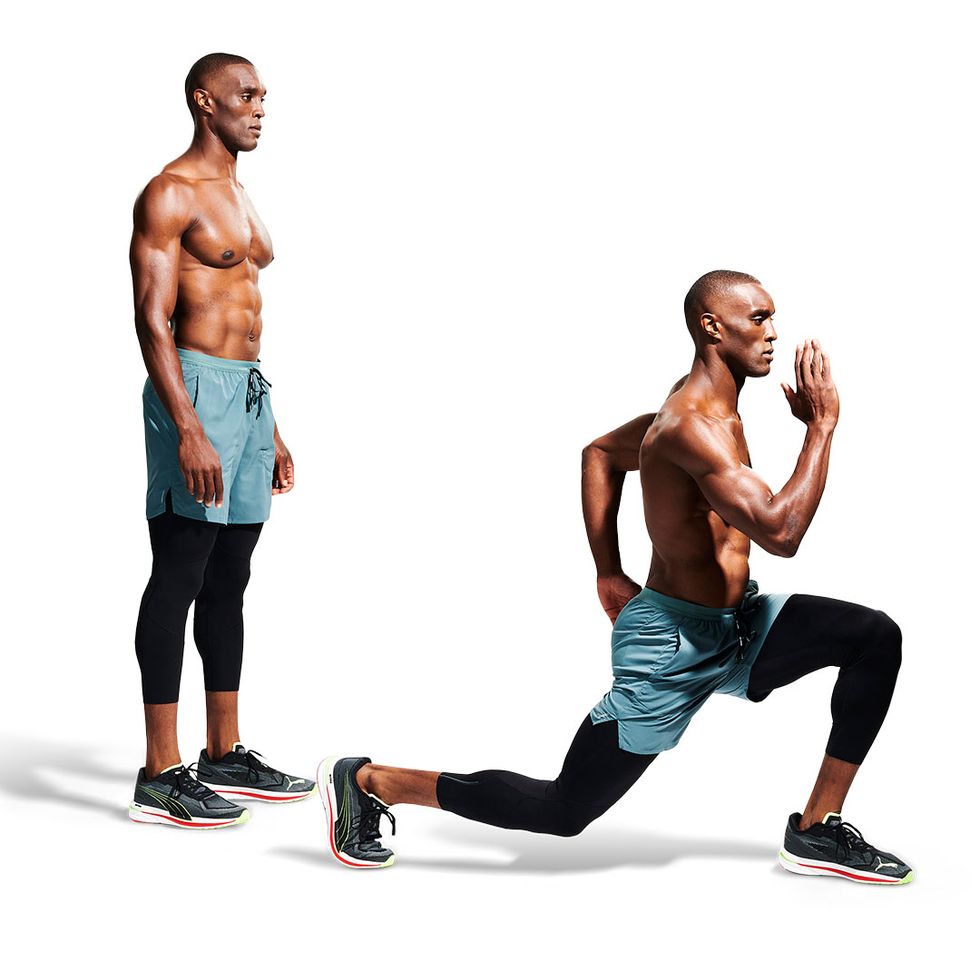
Stepping forwards means you have to catch and control your bodyweight before driving yourself backwards again. Alongside building unilateral leg strength, that makes the forward lunge useful for developing balance and your ability to absorb force.
Stand tall with your chest up. Take a long step forwards with one leg and bend at both knees until your back knee gently touches the ground. Keep your front foot planted and torso tall throughout. Drive through your front foot to stand back up explosively, returning to the starting position. Repeat on the opposite leg, alternating with each rep.
5. Reverse Lunge
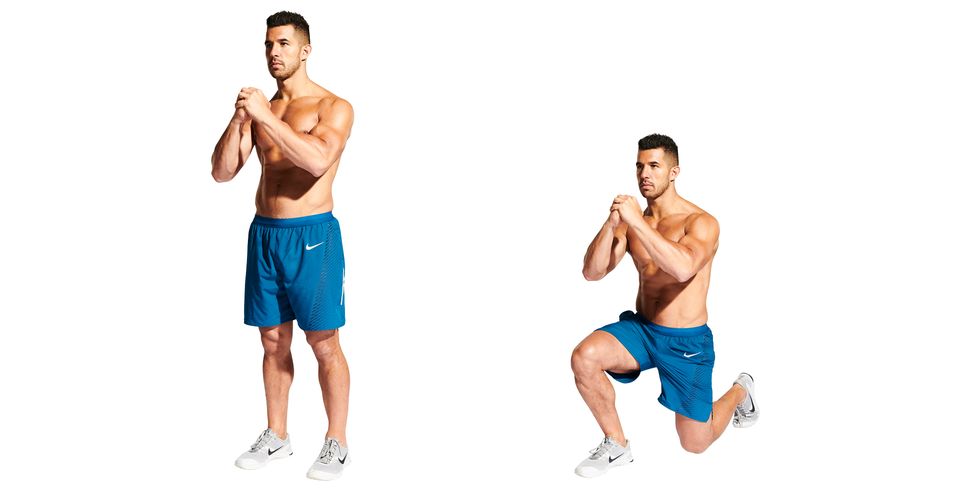
For many people the reverse lunge feels more stable and forgiving than stepping forwards. You can load the quads and glutes hard while keeping the front foot planted, making this a great option for accumulating high-quality unilateral reps.
Stand tall with your chest up. Take a long step backwards with one leg, bending your front knee until your back knee gently touches the ground. Keep your weight centred over your front foot. Drive through that foot and stand up and forwards explosively. Pause at the top before repeating with the opposite leg.
6. Split Squat
Take the stepping out of your lunges and you can concentrate on simply moving up and down, keeping constant tension through one leg. That stability makes the split squat ideal for pushing sets closer to muscular failure.
Take a long staggered stance with one foot in front of the other. Keep your torso upright and bend your front knee, dropping your rear knee towards the ground. Lightly touch down before driving through your front foot to stand back up, keeping your feet fixed throughout. Complete all of your reps on one side before switching legs.
7. Rear-Foot-Elevated Split Squat
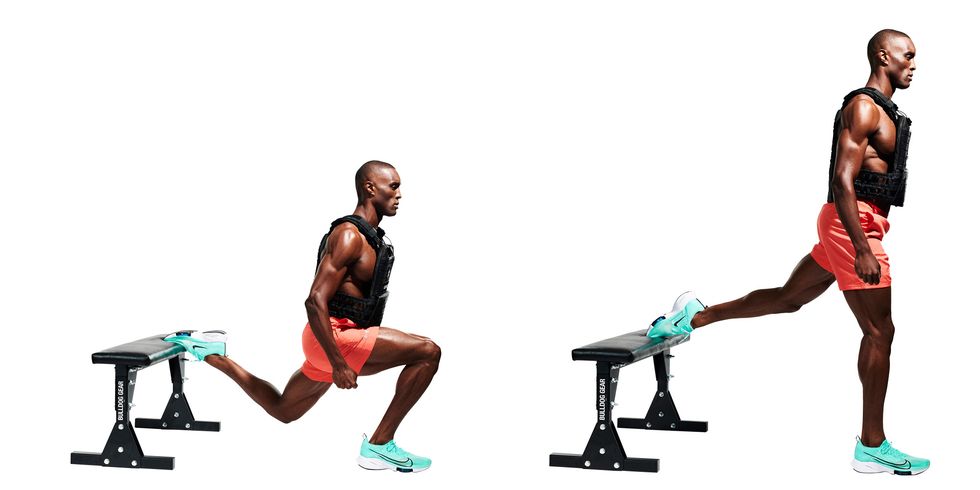
Elevating your rear foot shifts even more work onto the front leg and gives you access to a large range of motion. It’s probably one of the strongest arguments available against the idea that you need a barbell to train your legs hard.
Set yourself up with your rear foot resting on a bench, chair or step and your front foot far enough forwards that you can descend comfortably. Keeping your torso upright, bend your front knee and slowly lower your rear knee towards the ground. Once you reach maximum depth, drive through your front foot and stand back upright. Complete your reps before switching sides.
8. Front-Foot-Elevated Split Squat
This time it’s the working leg that gets elevated. The extra height allows your rear knee to travel further down, increasing the range of motion at both the hip and knee and making each rep considerably more demanding.
Stand in a split stance with your front foot elevated on a low step, book or sturdy block. Keep your entire front foot planted as you bend both knees and lower your back knee towards the floor, dropping as deeply as your mobility allows. Drive your front foot down hard and stand back up. Complete all reps before switching sides.
9. Walking Lunge
Walking lunges combine unilateral strength work with a continuous locomotion challenge. Rather than resetting after each rep, you keep moving forwards – hammering your quads and glutes while forcing your hips and core to stabilise you with every stride.
Stand tall and take a long step forwards. Bend your front knee until your rear knee gently touches the ground. Drive through your front foot and begin standing, bringing your rear leg forwards and immediately stepping into your next lunge. Continue moving forwards in this fashion, alternating legs with every stride while keeping your torso upright.
10. Hockey Lunge
By keeping one foot planted while dynamically moving the other from a forward to a reverse lunge, you can hammer the same leg from two different positions without ever really giving it a break. High reps turn this into an especially nasty conditioning tool.
Stand tall and plant one foot firmly in position. Step the opposite leg forwards and drop into a lunge. Drive up explosively and immediately swing that same leg backwards, dropping into a reverse lunge while keeping your planted foot fixed. Continue moving the free leg forwards and backwards in a smooth rhythm. Complete your reps before switching your planted leg.
11. Hindu Squat

A staple of traditional Indian physical culture, the Hindu squat uses a rhythmic, flowing style that lends itself to very high repetitions. Rising onto your toes also increases the involvement of the calves while demanding more balance than a conventional squat.
Stand tall with your feet around shoulder-width apart. Swing your arms behind you as you bend your knees and drop quickly into a deep squat, allowing your heels to rise from the ground. Sweep your arms forwards as you drive back upwards, lowering your heels as you reach standing. Keep the movement smooth and rhythmic, flowing directly into your next rep.
12. Pistol Squat
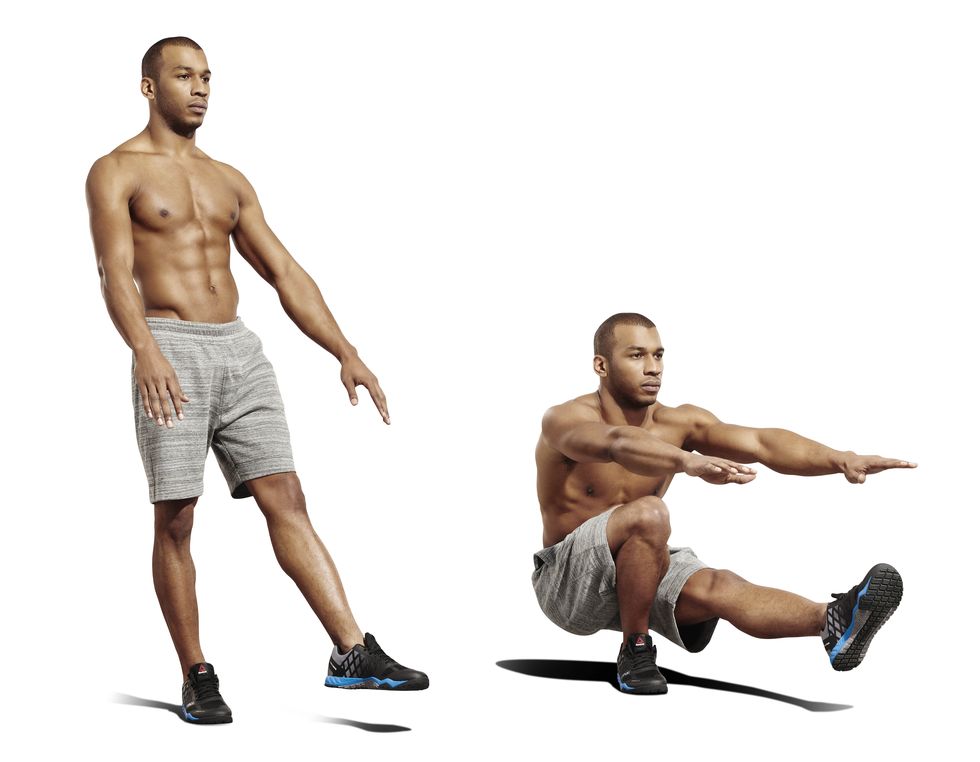
If regular squats have become laughably easy, remove a leg. Pistols demand serious quad and glute strength, but also expose weaknesses in your ankle mobility, coordination and balance. They’re as much a skill as they are a strength exercise.
Stand tall and lift one foot from the ground. Bend the opposite knee and slowly squat towards the floor, keeping your lifted leg straight and out in front of your body. Once the crease of your hip passes below your knee, pause. Drive through your planted foot to stand back up without letting your raised foot touch the floor.
13. Pistol Squat to Box
Think of this as the scalable version. A chair or box gives you a target and limits the range of motion, allowing you to gradually develop the strength and control required for a full pistol.
Stand tall with a box, chair or bench behind you and lift one foot from the ground. Slowly bend your standing leg and squat backwards, keeping your lifted leg straight in front of you. Once your glutes make contact with the box, pause rather than collapsing down. Drive through your planted foot to return to standing.
14. Split Squat Jump
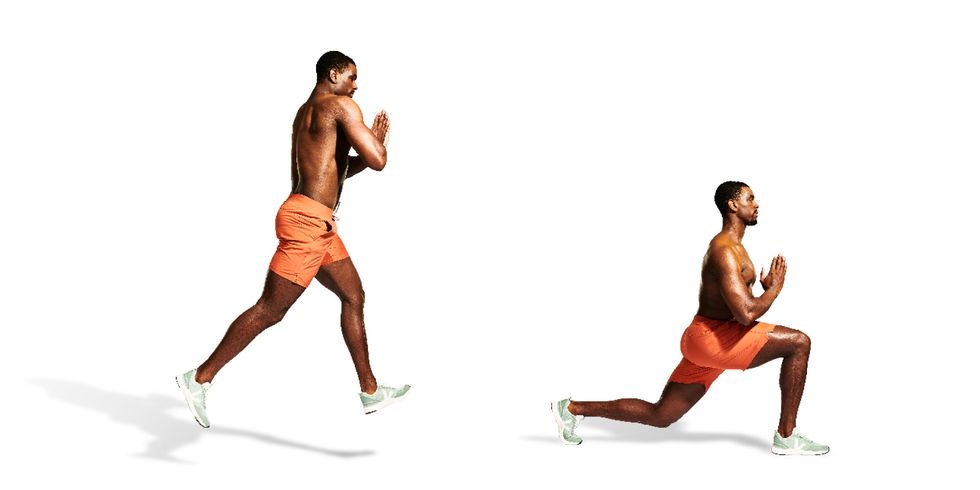
Once you’ve built some strength, teach yourself to express it quickly. Split squat jumps train your legs independently while adding speed, coordination and explosive power – and they’ll send your heart rate north rapidly.
Step one foot backwards and sink into a deep lunge, your rear knee lightly touching the floor. Explode upwards as powerfully as possible, switching your legs in mid-air. Land softly in a lunge with the opposite leg forwards, absorb the impact and immediately explode into your next rep. Continue alternating sides.
15. Squat Jump
The bodyweight squat’s more violent sibling. Instead of simply standing up, your goal is to accelerate your body hard enough to leave the floor. Treat these as power work rather than mindless cardio and make every jump count.
Lean slightly forwards as you squat down before using your arms to assist as you explode upwards, jumping as high as possible. Cushion your landing with bent knees and immediately sink back into your next squat. Keep each rep powerful – if the height of your jumps drops dramatically, take a breather before continuing.
16. Box Jump

A box gives you something tangible to attack and lets you land higher than you started, reducing the distance you have to fall after each jump. The aim isn’t to see how high you can tuck your knees – it’s to develop enough force to elevate your entire body.
Stand in front of a sturdy box or platform with your feet around hip-width apart. Dip at your knees, swing your arms and explode upwards onto the box. Land with both feet as softly as possible, bending your knees slightly to absorb the impact. Stand fully upright at the top before carefully stepping back down and repeating.
17. Burpee
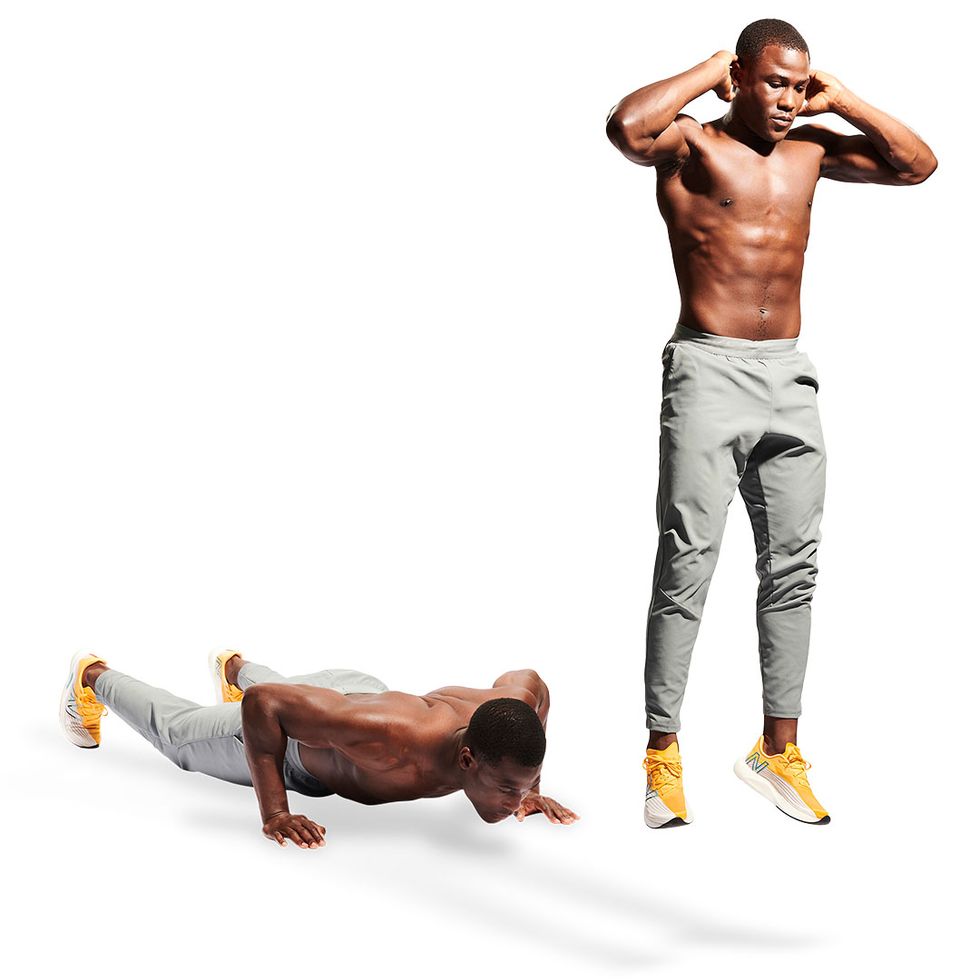
Nobody is pretending burpees are the ultimate hypertrophy movement. But repeatedly dropping to the floor and explosively standing and jumping again asks your legs to produce force while fatigue piles up – making them invaluable when strength-endurance and conditioning matter too.
Hinge, squat and place both hands on the floor between your feet. Jump your feet backwards into the top of a press-up and lower your chest to the ground. Press back up and hop your feet forwards. Stand explosively and jump into the air, touching your hands together overhead. Land and immediately begin your next rep.
18. Box Step-Up
Simple, scalable and surprisingly effective. Find a higher box and the difficulty climbs rapidly. Step-ups are also easy to perform for large amounts of volume without the coordination demands of pistols or jumping movements.
Stand in front of a box, bench or sturdy chair. Place one foot firmly on top and drive it down hard as you stand. Lean forwards slightly to maintain your balance but keep your torso controlled. Once at the top, fully extend your hips and knees. Slowly step backwards to the floor and repeat, alternating legs or completing one side at a time.
19. Lateral Step-Up

Most leg training happens straight forwards and backwards. Coming at your step-ups from the side changes the demands around the hip and asks your glutes and stabilising muscles to work differently while still providing plenty of stimulus to the quads.
Stand sideways next to a sturdy box or step. Place the foot closest to the box firmly on top. Drive that foot down and straighten your leg to lift yourself onto the box, keeping your torso tall and avoiding an exaggerated push from your trailing foot. Lower yourself slowly back to the ground. Complete your reps before switching sides.
20. Stair Climb
Sometimes the best exercise is simply the one you can do a lot of. Climbing a long flight of stairs gives you rep after rep of concentric leg work while naturally forcing each leg to work independently.
Find a suitably long staircase and climb briskly, driving through your entire foot with each step. Keep your torso tall and avoid relying excessively on the handrail. Take two steps at a time to increase the range of motion and demand on your glutes, or stick to singles and increase your speed. Walk back down under control and repeat.
21. Box Step-Over
Unlike a regular step-up, there’s no real reset between repetitions. Travelling up, across and down the other side keeps you moving and forces each leg to alternately produce and absorb force – a simple way of building both muscle and work capacity.
Stand tall in front of a box. Step one foot on top and drive it firmly into the surface. Lean forwards slightly for balance while keeping your torso controlled. Stand fully upright on top, bringing both feet onto the box, then continue forwards and step down the opposite side. Turn around and repeat in the opposite direction.
22. Step-Down
Here the focus shifts from hauling yourself upwards to controlling yourself downwards. That emphasis on the lowering phase gives your quads plenty to do and teaches you to control your knee and hip while balancing on one leg.
Stand on the edge of a step or low box with one foot hanging off the side. Keeping your planted foot flat, slowly bend your standing knee and lower the heel of your free leg towards the floor. Lightly tap down without transferring your weight, then drive through your planted foot to stand tall again. Complete your reps before switching legs.
23. Poliquin Step-Down
Elevating the heel and intentionally allowing the knee to travel forwards makes this variation particularly quad-focused. Start with a low platform – the challenge ramps up quickly when you’re controlling your entire bodyweight through one leg.
Stand on a low step with the heel of your working leg elevated on a wedge or solid object, your other foot hanging off the edge. Bend your standing knee and allow it to travel forwards as you slowly lower the opposite heel towards the floor. Lightly touch down, then drive through your working foot and straighten the leg. Repeat before switching sides.
24. Calf Raise on a Step
Don’t let your lower legs become an afterthought. Performing calf raises on a step allows your heel to drop below your toes, giving the calf a much larger range of motion than simply bouncing up and down from the floor.
Stand with the balls of your feet on the edge of a step, holding a wall or rail lightly for balance. Let your heels sink slowly towards the ground until you feel a deep stretch through your calves. Drive through the balls of your feet and rise as high onto your toes as possible. Pause at the top before slowly lowering again.
25. Single-Leg Glute Bridge

Squats and lunges dominate bodyweight leg training, but your posterior chain deserves some direct attention too. Removing one leg from the basic glute bridge makes your glutes work considerably harder without requiring a scrap of equipment.
Lie on your back with one knee bent, foot planted firmly on the floor. Raise your opposite leg away from the ground. Brace your core and squeeze your planted-side glute hard as you drive your hips upwards. Pause when your hips are fully extended, avoiding excessive arching through your lower back. Lower slowly to the floor and repeat before switching sides.
26. Hamstring Walkout
Training your hamstrings without weights is trickier than smashing your quads, which makes this deceptively simple movement especially useful. Walking your heels away from a bridge position dramatically increases the lever your hamstrings have to control.
Lie on your back with your knees bent and heels planted close to your glutes. Drive your hips upwards into a strong bridge. Keeping your hips elevated, take small steps forwards with your heels, gradually walking your feet away from your body until your legs are almost straight. Reverse the movement, walking your heels back towards your glutes while fighting to keep your hips high throughout.
27. Nordic Curl
Few bodyweight movements load your hamstrings as aggressively through the eccentric. Nordics force them to fight hard to control your entire body as you fall forwards, making them a potent option for building strength, muscle and resilience.
Kneel on the floor with your ankles securely anchored beneath something heavy or held by a partner. Keep your hips extended and torso rigid. Slowly lower your body forwards from the knees, resisting gravity with your hamstrings for as long as possible. Catch yourself with your hands, then use a small push from the floor to help return to the starting position.
28. Razor Curl
Razor curls combine knee flexion with hip movement, challenging the hamstrings at both joints they cross. That makes them a useful progression from more basic hamstring work and a serious test of posterior-chain control.
Kneel down with your ankles securely anchored and begin fully upright. Slowly hinge at the hips, keeping your spine neutral and lowering your head down towards the ground until you feel a deep stretch in your hamstrings. Pull with your hams to explosively come back into an upright position. Think of this as an unloaded deadlift.
29. Cossack Squat
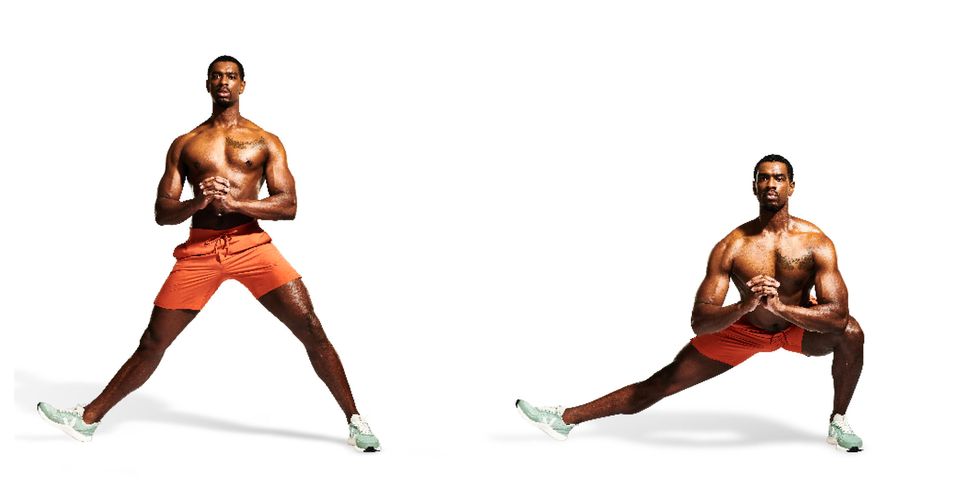
Most leg exercises keep you moving forwards and backwards. Cossack squats take you laterally, loading the quads, glutes and adductors while simultaneously challenging hip and ankle mobility.
Take a very wide stance with your toes turned slightly out. Shift your weight onto one leg, bending that knee deeply as you push your hips back and keep the opposite leg straight. Allow the toes of your straight leg to lift if necessary. Sink as low as you can control, then drive through your bent leg to return to centre before repeating on the opposite side.

If there’s one thing Kori Sampson knows, it’s how to optimise your body composition for performance. To tap into his knowledge as an elite athlete and coach, we asked him to create a 4-week plan to help you move faster, recover quicker and keep pushing when the fatigue sets in – all while improving your muscle-to-fat ratio.
Ready to build muscle, burn fat and come out the other side looking, feeling and performing better? Click here to get 14 days of free access to the plan via the Men’s Health app.


