
It's safe to say the 2026 F1 season is going well for Lewis Hamilton. He’s the only driver to have scored points in every round of the season so far and sits second in the drivers' standings as we head into the second half of the season, between George Russell and Charles Leclerc.
But Hamilton’s success hasn’t come from nowhere. Ahead of the start of the season in March, he shared clips from his pre-season training, saying it was ‘the most’ he’d ever trained between seasons.
And he hasn’t been using the summer break to put his feet up, either. This week, he shared a video of himself tackling a brutal core workout, using an ab roller board to ramp up the difficulty.
Lewis Hamilton’s Core Workout
Hamilton’s workout is far from a conventional core session. Revolving around three movements – cross-body core stretches, anti-rotation planks and dynamic loaded reach-throughs – the workout consists of two sets, with each move completed for 20 reps followed by a short rest.
The session is full of push-up and ab rollout variations that you’ve probably never come across before – likely because they're tailored specifically to Hamilton’s needs as an F1 driver.

F1 drivers need strong core muscles to withstand the G-forces their bodies are subjected to during a race. Muscles that resist rotation, including the internal and external obliques and deep transverse abdominis, are particularly important for keeping the torso stable as drivers corner at high speeds.
What to read next
That may explain why many of Hamilton’s movements introduce an element of instability. Raising a leg or using an unstable implement such as an ab roller board increases the demand on his core to prevent his hips and torso from rotating.
Equipment such as sliders and ab wheels can also make core exercises significantly more challenging by forcing you to maintain control as your limbs move further away from your centre of mass.
How to Build Anti-Rotational Core Strength
Want to build the kind of core strength that Hamilton relies on behind the wheel? You don't need to jump straight into his advanced variations. These three exercises offer a more accessible place to start.
Pallof Press
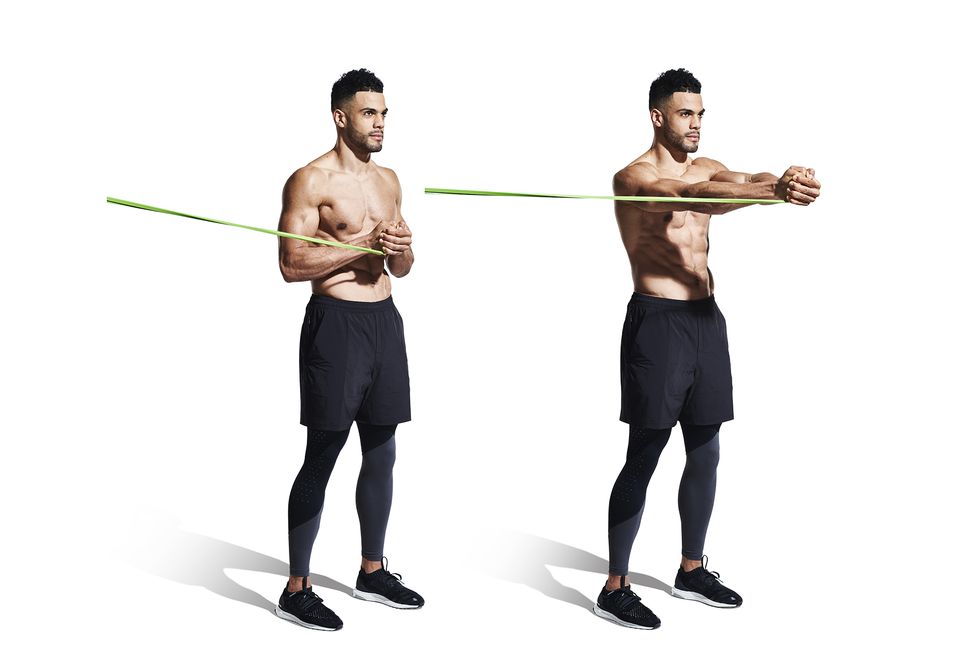
The band or cable will try to pull your torso towards the anchor point. Your job is to resist that rotation and keep your body facing straight ahead, challenging your obliques and the deeper muscles of your core.
How to Do the Pallof Press
- Attach a resistance band or set a cable machine to around hip height. Grip the band or cable handle with both hands.
- Take a few steps away from the attachment until you feel tension, then stand side-on to the anchor point.
- Hold the band or handle in front of your stomach, keeping your hips square and core braced.
- Exhale as you press your hands straight out in front of you. Hold briefly without allowing your torso to rotate, then return to the starting position and repeat.
Renegade Row

The renegade row combines upper-body pulling strength with a serious anti-rotation challenge. As you lift one weight from the floor, your core has to work hard to prevent your hips and torso from twisting with it.
How to Do a Renegade Row
- Start in a strong plank position with both hands gripping your dumbbells.
- Shift your weight onto your left hand and row the right dumbbell towards your hip, keeping your hips as square to the floor as possible.
- Pause briefly, then lower the weight under control.
- Repeat on the opposite side. Left and right equals one rep.
Suitcase Carry
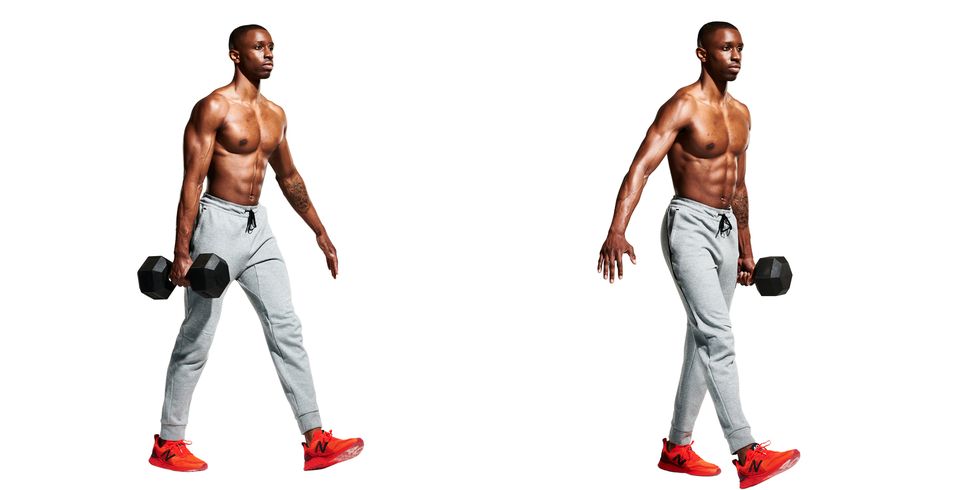
Holding a weight on one side of your body, rather than both sides as you would during a farmer's carry, forces your core to resist the weight pulling your torso sideways.
How to Do the Suitcase Carry
- Stand tall with a dumbbell or kettlebell in one hand.
- Brace your core and begin walking with deliberate, controlled steps.
- Once you reach the end of your chosen distance – around 20 metres is a good starting point – turn without allowing the weight to swing and walk back.
- Keep your shoulders level and resist the temptation to lean towards or away from the weight.
- Repeat on the opposite side.
If there’s one thing Kori Sampson knows, it’s how to optimise your body composition for performance. To tap into his knowledge as an elite athlete and coach, we asked him to create a 4-week plan to help you move faster, recover quicker and keep pushing when the fatigue sets in – all while improving your muscle-to-fat ratio.
Ready to build muscle, burn fat and come out the other side looking, feeling and performing better? Click here to get 14 days of free access to the plan via the Men’s Health app.


