The 7 Best Home Saunas, According to Fitness Editors and Experts
Our team recommend saunas from Almost Heaven, Sun Home, and Higherdose.
 Reviewed by Ebenezer Samuel, C.S.C.S.Fitness Director
Our product picks are editor-tested, expert-approved. We may earn a commission through links on our site. Why Trust Us?
A HOME SAUNA can turn your basement or backyard into a recovery oasis. When used regularly, these hot boxes have amazing long-term health benefits as well, according to experts we spoke with. "Research shows clear benefits to regular sauna use, ranging from reduced risk of mortality from heart disease, to better glucose control to better mental health," says Lance Dalleck, PhD, a professor of Exercise and Sport Science and High-Altitude Exercise Physiology at Western Colorado University.
The best home saunas can also be used for stress relief, muscle soreness, and joint pain, says Daniel Giordano, C.S.C.S., Chief Medical Officer at Bespoke Physical Therapy. "Regular sauna use has also been associated with cardiovascular benefits and enhanced skin health."
Best Home Saunas
- Best Overall: Almost Heaven Salem Barrel Sauna
- Best Infrared: Sunlighten mPulse Aspire Sauna
- Best Budget: Dynamic Saunas Hemlock Infrared Sauna
- Best Luxury: Higherdose Full Spectrum Infrared Sauna
- Best Portable: X-Vcak Upgraded Sauna Box
There’s no getting around the fact that home saunas are a serious investment, though. They require a ton of floor space, regular maintenance, a sizable amount of electricity to operate, and even the most affordable models cost several thousand dollars. That’s why our team consulted with a variety of fitness experts to pull together a list of the very best home saunas available right now.
How We Selected
As the Fitness and Reviews Editor at Men's Health, it's my job to test the latest and greatest gear, which includes home saunas. I've used saunas as part of my recovery routine for years, both at home and at the performance centers that I frequent in the New York area. The variety of settings that I've used saunas in has also allowed me to use a large range of saunas, from five-person infrared saunas to single-person steam boxes to sauna blankets.
On top of that, our team researched and vetted more than a dozen home sauna solutions. We compared everything from design and features to build quality and price. With the help of two experts in the field—Lance Dalleck, PhD, a professor at Western Colorado University, and Daniel Giordano, CSCS, Chief Medical Officer at Bespoke Physical Therapy—we narrowed our list of recommendations down to just eight. These are our picks for the best home saunas worth buying in 2026.
 Best Deal

Almost Heaven 2-Person Salem Barrel

Almost Heaven 2-Person Salem Barrel
Pros
- Perfect aesthetic and build for outdoor use
- Efficient heat circulation
- Easy DIY assembly

Cons
- Not ideal for indoor use

The Almost Heaven Salem Barrel Sauna offers a distinctive, rustic charm that instantly elevates any backyard or outdoor space. I used this sauna as part of a backyard setup, surrounded by trees, and have to say it was a perfect unit for that kind of scenario. I could also see it being great in a suburban environment.
The elevated barrel design isn’t just for aesthetics—the curved shape promotes efficient heat circulation and minimizes warm-up time, creating a consistently cozy environment inside. Constructed from high-quality, thick cedar or spruce staves, the Salem feels sturdy and well-built, with a pleasing natural aroma that adds to the overall sauna experience.
Setting up the Salem Barrel Sauna on your own is entirely manageable, with pretty helpful instructions provided online and pre-cut components that slide in easily. Another pair of hands makes it go by faster, and you can do it in an afternoon. The materials were chosen to handle all kinds of elements, and the heater is compact and effective, whether you go with electric or wood-burning.
There are more expensive units out there that have more tech and more glass, but I personally prefer this kind of experience. The two-person option is great because it allows you to recover with a partner, or if you are doing a solo session gives you even more space to spread out and soak in the heat.
Read More: Best Cold Plunges
| Type | Electric (other options available) |
| Materials | Wood |
| Maximum Temperature | 195°F |
| Maximum Capacity | 2 |
| Delivery | Included |
| Overall Dimensions | 78 x 47 x 75 ⅜ in. |
| Power Required | 240V, 30-amp requirement, hard-wire connect |
| Weight | 601 lbs |
Sunlighten mPulse Aspire

Sunlighten mPulse Aspire
Pros
- Delivers both infrared and red light therapy
- User-friendly tech
- Built with premium woods
Cons
- Requires space and dedicated electrical outlet
Our Editorial Director Richard Dorment chose this sauna to install into his own basement. What started as an empty closet next to his family gym became the perfect spot for a compact, high-tech infrared sauna. The Aspire’s sleek, spa-like design is a far cry from the clunky, old-school wooden boxes you have seen in the past. Assembly required additional hands, but the color-coded wiring and well-engineered panels made it feel more like building a premium piece of furniture than tackling a complicated renovation.
Once installed, the mPulse Aspire delivers a unique blend of near, mid, and far infrared wavelengths, along with integrated red-light therapy—features that set it apart from most home sauna options. The heat doesn’t slam you like a traditional hot-rock sauna; instead, it builds slowly and steadily, enveloping you in warmth from the back and sides. While near-infrared and red light work more on the surface (with some evidence for benefits like improved skin quality and reduced inflammation), the mid and far wavelengths penetrate deeper, promoting a sweat that’s both cleansing and restorative.
Beyond the heat and light, the Aspire’s built-in Android tablet and sound system add a level of modern convenience, letting you listen to music or catch up on shows while you unwind. This isn’t a budget-friendly impulse buy—it requires dedicated space, electrical work, and a real commitment to consistent use. But if you’re ready to treat wellness as part of your home infrastructure, the mPulse Aspire excels at transforming recovery into a ritual.
| Type | Infrared |
| Materials | Basswood and Eucalyptus |
| Maximum Temperature | 160°F |
| Maximum Capacity | 1 |
| Delivery | Included |
| Overall Dimensions | 43.6 x 41.6 x 78.5 in. |
| Power Required | Dedicated 120V 20A Circuit Required |
| Weight | 432 lbs |
Dynamic Saunas Hemlock Wood Infrared Sauna
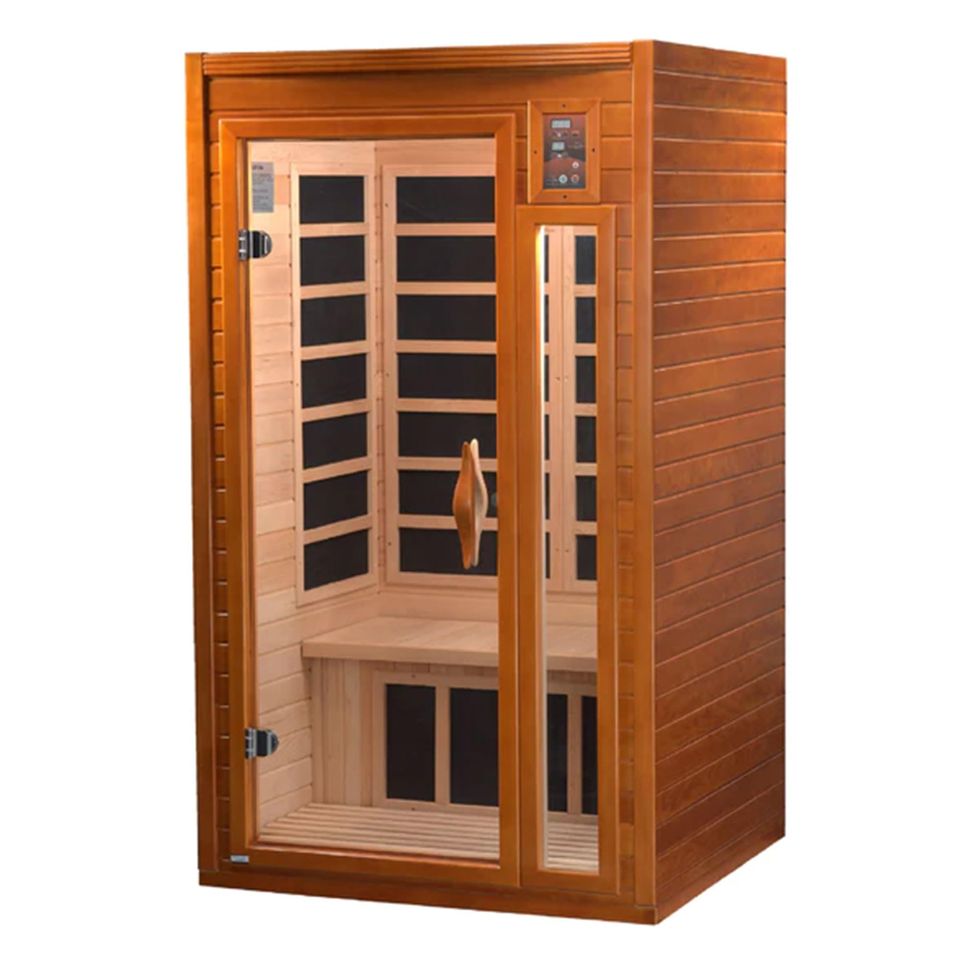
Dynamic Saunas Hemlock Wood Infrared Sauna
Pros
- Durable hemlock wood construction
- Modern, minimalist design
- Low EMF
- Simple, clip-together assembly
- Chromotherapy reading light and interior/exterior control panels
Cons
- Indoor use only
This infrared model from Dynamic Saunas ticks most of our must-have boxes. The design is minimalist, lightweight, and easy to install, with clasp-together panels that go together in less than an hour. With low EMF energy-efficient panels, it'll save you a bit on electricity in the long run, too.
We found that its compact build can still house up to two people, making it ideal for tight indoor spaces where square footage is at a premium. Giordano loves the durable hemlock wood construction, chromotherapy lighting for a spa-like vibe, and safety settings. Plus: Free curbside delivery!
Read More: Best Compression Boots, Tested By Us

Features at a Glance
| Type | Infrared |
| Materials | Hemlock wood |
| Maximum Temperature | 140°F |
| Maximum Capacity | 2 |
| Delivery | Free curbside |
| Overall Dimensions | 39 x 36 x 73 in. |
| Weight | 250 lbs |
Higherdose Full Spectrum Infrared Sauna
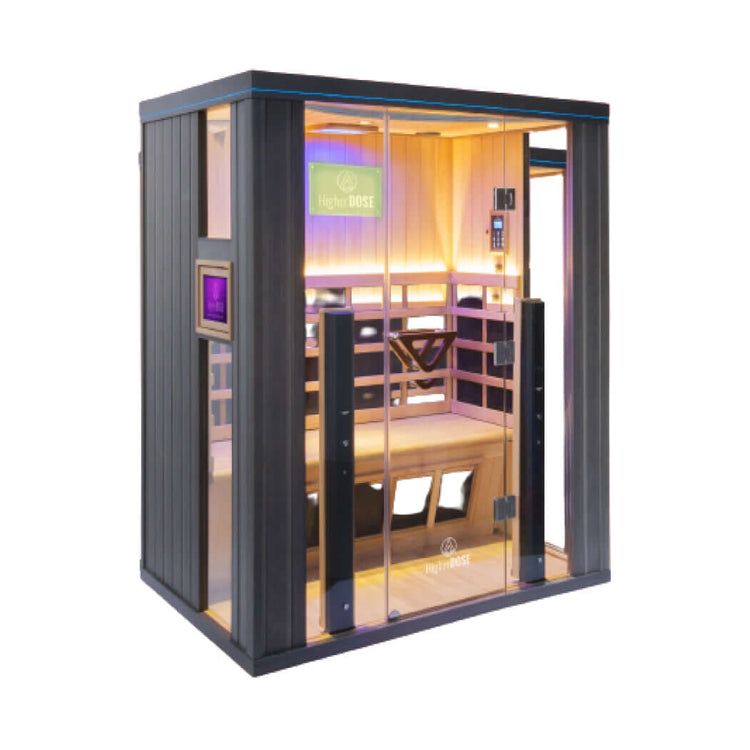
Higherdose Full Spectrum Infrared Sauna
Pros
- Beautiful, modern design feels worthy of a luxury spa
- Durable, ultra-premium, no-expense-spared construction
- LED chromotherapy lighting
- Premium entertainment system, Bluetooth connectivity, and an iPad holder
- 5-year warranty
Cons
- Expensive compared to alternatives
- 30-amp circuit required for 3-person model
- Steep delivery charge
Higherdose's ultra-luxe home saunas are as good as it gets. The design is the swankiest we've seen all year, and the durable, premium construction is backed with a solid, five-year warranty. This full-spectrum infrared system maxes out at 174°F, courtesy of carbon/ceramic heaters with low EMF and added chromotherapy to boot.
On the downside, you'll pay handsomely for the privilege of this model (plus a $1,000 delivery charge). However, you can save by opting for the smaller two-person model with many of the same features.
Read More: Best Infrared Sauna Blankets, Tested By Us
Features at a Glance
| Type | Infrared |
| Materials | Engineered wood exterior, mahogany interior |
| Maximum Temperature | 174°F |
| Maximum Capacity | 3 |
| Delivery | $999 (3-person), $899 (2-person) |
| Overall Dimensions | 77 x 71 x 48 in. |
| Weight | Unspecified |
X-Vcak Upgraded Sauna Box

X-Vcak Upgraded Sauna Box
Pros
- Ultra-portable design is easy to transport, setup, and take down
- Includes a folding chair
- Goes up to 149℉
- Very affordable
Cons
- Not really a true sauna
For an ultra-compact, portable, and budget-friendly alternative to a legit home sauna, we like this steam/sauna box from X-Vcak. It's a no-frills option, for sure. There's only room for one and a folding camp chair along with the portable steamer.
The trade-off is a crazy simple design that you can take almost anywhere and set up/break down in less than 20 minutes. The max 149℉ won't compete with a genuine home sauna, but it's still a great way to get a sweat session.
Read More: Sauna Benefits
Features at a Glance
| Type | Steamroom |
| Materials | Waterproof canvas |
| Maximum Temperature | 149°F |
| Maximum Capacity | 1 |
| Delivery | Free |
| Overall Dimensions | 71 x 31.5 x 31.5 in. |
| Weight | 15.87 lbs |
Sun Home Saunas Luminar Outdoor 5-Person Infrared Sauna

Sun Home Saunas Luminar Outdoor 5-Person Infrared Sauna
Pros
- Luxurious, modern design with double-pane glass exterior
- Heat-treated, carbonized cedar is extremely durable
- Mobile-app-enabled to control Bluetooth surround sound and thermostat
- Roomy enough for the whole family
Cons
- Large, heavy design
- Requires more than one person to assemble
- Dedicated 30-amp circuit required
If money is no object, this five-person model is better than any other large home sauna on the market. The handsome, modern design is bolstered by all-weather, carbonized, heat-treated cedar (i.e. incredibly durable), and most features are handled via a dedicated mobile app. With 15 high-output heaters (including five infrared heaters), it heats up fast and evenly, especially compared to the cheaper options on this list.
Luxury features include Bluetooth surround sound and customizable LED lighting. Plus, it's indoor- and outdoor-compatible. It's big, heavy, and expensive, but you definitely get what you pay for. If only the best will do …
Read more: Best Massage Guns, Tested By Us
Features at a Glance
| Type | Infrared |
| Materials | Carbonized heat-treated cedar wood |
| Maximum Temperature | 140°F |
| Maximum Capacity | 5 |
| Delivery | Free |
| Overall Dimensions | 82 x 82 x 51.5 in. |
| Weight | 1,270 lbs |
Higherdose Infrared Sauna Blanket (Kit)

Higherdose Infrared Sauna Blanket (Kit)
Pros
- Compact, portable, and easy-to-use
- Zippered closure seals heat in
- Customizable heat settings
- 1-hour safety shut-off
- Carry bag included
Cons
- Insert sold separately
If legit saunas are too big, expensive, or both for your taste, this sauna blanket is a solid option. The design is dead simple to use: Just climb inside, zip yourself up, and crank the heat to any of the eight available settings to start your sweat. It gets pretty hot (up to 158°F!), but thankfully, there's a built-in shutoff feature to prevent you from accidentally cooking yourself. A washable bamboo insert is sold separately, but worth the splurge, especially if you'll be using this on the regular. Otherwise, testers say that this can be a pain to clean without the insert.
Features at a Glance
| Type | Blanket |
| Materials | Polyurethane leather |
| Maximum Temperature | 158°F |
| Maximum Capacity | 1 |
| Delivery | Free |
| Overall Dimensions | 71 x 31 in. |
| Weight | Unspecified |
What to Consider
Type
There are two types of home saunas: Infrared and dry. The former uses infrared lamps to heat the body at a lower temperature (approximately 120°F to 150°F), so it tends to be more comfortable for prolonged use. A traditional dry sauna uses heated rocks or panels to produce higher temperatures (160°F to 200°F) through dry heat to raise the body’s core temperature and create a more intense sweat.
Material
Ideally, we recommend buying a home sauna with the most durable materials you can realistically afford. Giordano recommends cedar or hemlock wood saunas as two solid bets, as they heat evenly and consistently. Plus, they look great too. For the smaller, more compact options, and blankets, which your skin is in constant contact with, you are going to want materials that resist moisture and wipe off easily.
Size
Consider the size of your new sauna to make sure it’s large enough to accommodate the maximum number of users at once. However, even if more than one person uses it regularly, you might not need to buy a huge one. "How many people will really be using it at the same time?" says Dalleck.
Maintenance and Power Requirements
Beyond the initial investment, home saunas require routine maintenance and upkeep. Consider the long-term cost of things like cleaning and ventilation. You’ll also want to make sure that your home’s electrical system can handle the increased power load. While smaller models only require a standard 120V outlet, some of the larger and more premium models require dedicated 240V circuits and professional installation.
Features and Extras
While not totally necessary, many of today’s best home saunas offer extra features and add-ons. If you want to really turn your space into a hotel spa, look for saunas with built-in speakers, Bluetooth compatibility, red light options, chromotherapy, and even aromatherapy.
More Saunas That We're Testing
- The Original Plunge Sauna—being tested by Charles Thorp
Meet the Experts
- Lance Dalleck, PhD, is a Professor of Exercise and Sport Science and High-Altitude Exercise Physiology at Western Colorado University.
- Dr. Daniel Giordano, PT, DPT C.S.C.S., is the Chief Medical Officer at Bespoke Physical Therapy.
FAQs
How Often Should I Use a Home Sauna?
The more, the better! Dalleck says that there’s a clear relationship between how much you sauna and the benefits it provides. “Research shows people who use the sauna daily versus just 1-2 times can receive an additional 10-20% benefit," he says. "Similarly, sauna times of 10-20 minutes come with significantly more health benefits relative to less than 10 minutes.”
Which Is Better: An Infrared or Dry Home Sauna?
Both can provide significant health benefits. Giordano says that it ultimately depends on individual preferences and needs. Traditional dry saunas usually have higher temperatures, according to Giordano. Water is poured on the heated surfaces to produce steam and increase humidity, but the primary heat source is dry. Infrared saunas, on the other hand, provide more gentle heat and potential deeper tissue penetration. They use infrared lamps or panels to emit infrared light. Infrared light directly heats the body rather than heating the air around it.
Dalleck likes dry saunas because they tend to run hotter, and most of the available research has been done on dry saunas. He notes that infrared saunas are often more comfortable, but the primary driver behind all the above-mentioned health benefits would be improved core temperature. "So any sauna with a lower temperature [e.g., infrared saunas] would need a greater exposure time to begin to elicit the same benefits of the more traditional dry sauna," says Dalleck. If you’re unsure which type is best for you, Dalleck suggests finding a local gym, hotel, or even a friend with a sauna to get a sense of how well it might work for you.
Do Home Saunas Really Work?
Numerous long-term scientific studies say yes! Giordano points to one Finnish study, in particular, from researchers at the University of Eastern Finland, published in JAMA Internal Medicine in 2015. It followed more than 2,000 middle-aged men over the course of about 20 years, concluding a list of incredible health benefits through regular sauna use.
These included lower blood pressure, decreased risk of dementia and Alzheimer’s disease, and decreased risk of respiratory diseases (e.g., things like pneumonia and chronic obstructive pulmonary disease/COPD). Giordano specifically notes a reduced risk of fatal cardiovascular events (e.g., sudden cardiac death, cardiovascular disease, coronary heart disease, and all-cause mortality), too. Most notably, the risk of these cardiovascular events decreased as the frequency and duration of sauna sessions increased (e.g., twice weekly for 20 minutes per session to four times weekly for 20 minutes per session).
Charles Thorp is the Fitness and Reviews Editor at Men’s Health, where he shares the best product recommendations in gym equipment, recovery tools, supplements, and more. Following an early life in athletics, Charles became a NASM-certified trainer and began writing programs alongside the most respected coaches in the world. Since entering the world of fitness content, Charles has had the opportunity to learn from and train alongside high performance individuals from the NFL, UFC, NBA, Formula 1, CrossFit, US Olympics, and Navy SEALs. When he’s not writing about training programs or gear, he can be seen at the gym or in the wild, putting them to the test.
Ebenezer Samuel, C.S.C.S., is the fitness director of Men's Health and a certified trainer with more than 10 years of training experience. He's logged training time with NFL athletes and track athletes and his current training regimen includes weight training, HIIT conditioning, and yoga. Before joining Men's Health, he served as a sports columnist and tech columnist for the New York Daily News.

Readers Also Read

This Tool Can Stimulate Muscle Recovery

Smart Scales to Unlock Your True Health Potential

The 2026 Men’s Health Smell Fresh Awards

This Cold Plunge Changed How I Recover