6 Best Kettlebells of 2026, According to Personal Trainers
Grab one of these weights and get into the swing of things.
 Reviewed by Ebenezer Samuel, C.S.C.S.Fitness Director
Our product picks are editor-tested, expert-approved. We may earn a commission through links on our site. Why Trust Us?
KETTLEBELLS ARE ONE of the most dynamic pieces of home gym equipment that you can have in your fitness toolbox. Not only are they great for strength training, but they're perfect for adding an extra challenge to HIIT or cardio workouts. Their versatile design allows you to effectively train multiple muscle groups at the same time, providing a lot of bang for the buck. The fact is, if there's a kettlebell around you have everything you need for a great workout.
The best kettlebells can be used for deadlifting, core workouts, snatches, and rows; you can take on kettlebell burpees for ultimate torture; use the implements in combination with jump ropes for a killer workout; and, of course, kettlebell swings. Use them as a great tool on leg day and to help you improve your balance and coordination. (Looking for more kettlebell workout inspiration? Try this 31-day kettlebell workout from kettlebell expert Marcus Martinez, C.S.C.S. that uses compound exercises to challenge your whole body. Or try the Men's Health 30-Day Kettlebell Challenge.)
Best Kettlebells
- Best Overall Kettlebell: Yes4All Powder Coated Kettlebell
- Most Durable Adjustable Kettlebell: REP Fitness Adjustable Kettlebells
- Best Entry-Level Kettlebell: Amazon Basics Vinyl Kettlebell
- Most Versatile Adjustable Kettlebell: Bowflex SelectTech 840 Adjustable Kettlebell
- Best Rubber-Coated Kettlebell: Rogue Rubber Coated Kettlebells
- Best Kettlebell Bag: GoRuck Sand Kettlebell
There is a wide range of kettlebell types to choose from when it comes to design, material, shapes, and wsixs (some of the best kettlebells we've tested are even adjustable!). Not sure where to start? We got you. Below, eight of the best kettlebells to add to your home gym in 2026.
How We Selected
As the Fitness and Reviews Editor of Men's Health, it's my job to test the latest and greatest in fitness equipment, including kettlebells. I also consulted with my fellow Men's Health fitness editors, and experts included but not limited to Fitness Director Ebenezer Samuel, C.S.C.S., Senior Fitness Editor Brett Williams, NASM, Marcus Martinez, C.S.C.S., and Jah Washington, C.S.C.S.
Our team looked at all the kettlebells on the market, old and new. Starting with a large selection, we tested each model extensively for design and durability. This testing was done in a variety of training scenarios and environments, from backyard training sessions to garage gym workouts. Look below for the six best kettlebells to buy right now.
Yes4All Powder Coated Kettlebell

Yes4All Powder Coated Kettlebell
Pros
- Grippy, powder-coated finish
- Wide range of weights available
- Well-balanced
- Color-coded design

Cons
- Some long-term flaking/chipping issues (though minimal)

Having the right grip is key to safe and efficient kettlebell workouts. These powder-coated classics are among the grippiest we've tested, with just the right amount of friction to eliminate the need for chalking the hands. We've found the single-cast, weld-free design to be incredibly well-balanced and durable, with only minimal chipping/flaking after months of use.
Yes4All offers a good variety of weights/sizes (almost a dozen), and we also like the color-coded rings, making it easy to know what's what if you happen to own a complete set. These are quality pieces that you can be proud to have a collection of.
Getting the full set is another accomplishable goal with Yes4All, and that isn't the case for all kettlebell brands. I've purchased and been sent a good number of 'bells over the years, and inventory is often a problem for distributors. This has never been the case for Yes4All, which I really appreciate.
Read More: Best Dumbbells
| Weight | 9-62 lbs |
| Casting | Cast iron |
| Coating | Powder |
| Style | Classic |
REP Fitness Adjustable Kettlebells

REP Fitness Adjustable Kettlebells
Pros
- Versatile "hybrid" (classic/adjustable) design
- Extremely well-built, solid, durable
- Easy to adjust weight
- Great weight distribution
- Rubber bottom helps protect floors
Cons
- Plastic (not metal) components hold weights in place
- Pricey, compared to non-adjustable single-weight options
We love adjustable kettlebells for their versatility and ability to save a little floor space. Here, REP splits the difference between an old-school 'bell and a modern adjustable kettlebell. It looks and feels like a classic kettlebell, with the proper weight distribution to match.
It’s ultra durable, easy to adjust, and the additional weights won’t shake or rattle when you're tossing things around. Plus, we love the grippy, matte-powder-coated surface and rubber bottom to protect your floors.
Read More: Best Adjustable Kettlebells
| Weight | 17-35 lbs; 20-40 lbs; 35-53 lbs |
| Casting | Cast iron |
| Coating | Powder |
| Style | Competition |
Amazon Basics Vinyl Kettlebell

Amazon Basics Vinyl Kettlebell
Pros
- Affordable
- Textured handle for better grip
- Good selection of weights/sizes
Cons
- Vinyl can get slick when wet/sweaty
If you’re working out at home and looking for your first kettlebell to work with, this is a reasonable choice. It should come as no surprise that Amazon has a good read on how to have a quality product made without unnecessary expense. For the price, you won’t get a kettlebell that will grow with you as your fitness level increases or will hold up to years of intense use.
What you will get is a functional, affordable piece of equipment to add resistance to your workouts. We do wish this was powder-coated because the vinyl can feel slick when things get sweaty, but overall it’s a great choice for the price. (Plus, vinyl carries less potential to scuff and ding your floors compared to cast iron.)
| Weight | 10-45 lbs |
| Casting | Cast iron |
| Coating | Vinyl |
| Style | Classic |
Bowflex SelectTech 840 Adjustable Kettlebell
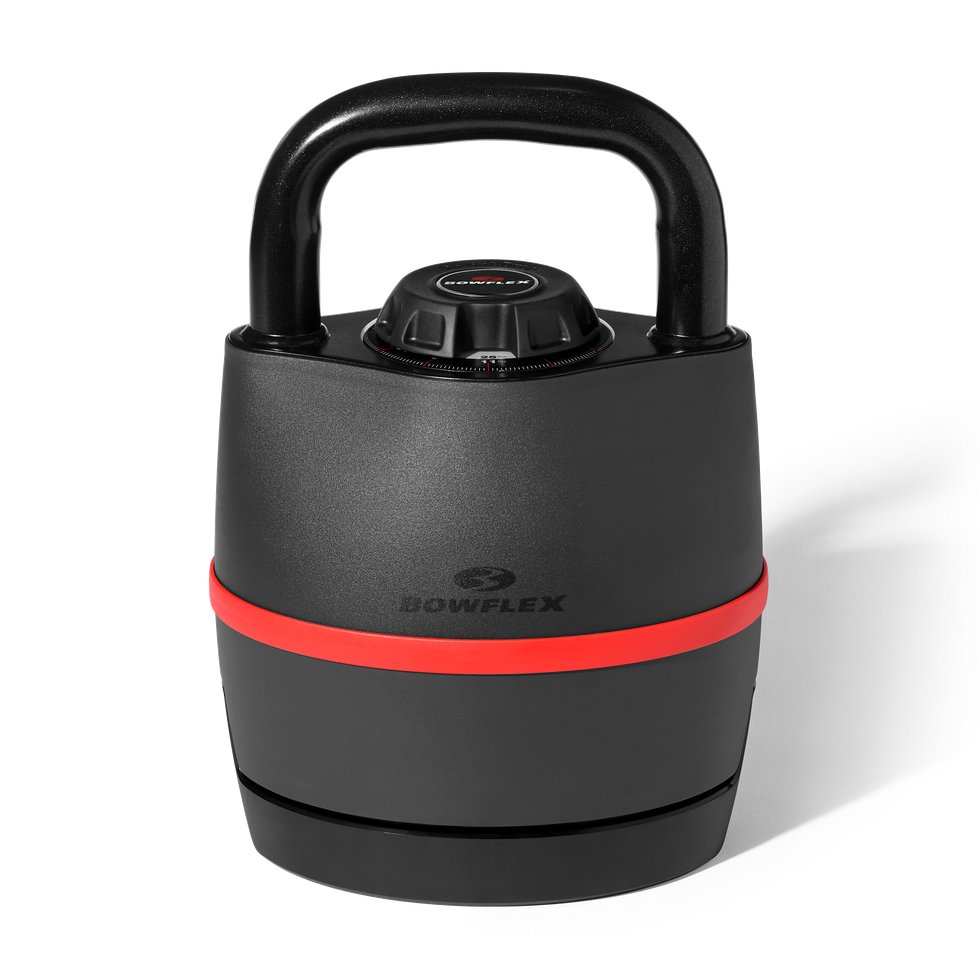
Bowflex SelectTech 840 Adjustable Kettlebell
Pros
- Solid and durable
- Adjustable design is money- and space-saving
- Ergonomic handle
- Includes free trainer-led exercises and technique videos
Cons
- Handles are extremely smooth
- Weight distribution is different than a traditional kettlebell (a pro for some)
If your budget allows, going with an adjustable option is always a smart space-saving move. This next-gen kettlebell features a modernized design and solid, durable construction. We love the simple, easy-adjust mechanism, which allows for more versatility and usability in home workouts. The weight can be changed to your exact preferences for each exercise, so you can replace six kettlebells with just one to save space and money.
The only downside? Thorp says, "The weight distribution feels slightly different than a traditional kettlebell due to its shape. Because of that, I don't love it for things like KB swings or Turkish getups, but it works great for most other KB exercises I do at home. And the trade-off in terms of space is well worth it for apartment dwellers."
| Weight | Individually adjustable from 8-40 lbs |
| Casting | Composite |
| Coating | Enamel |
| Style | Competition |
Rogue Rubber Coated Kettlebells

Rogue Rubber Coated Kettlebells
Pros
- Made with first-run iron ore (versus scrap)
- High-quality design
- Durable, rubber coating around the entire bell
- Color-coded handles
- Machined-flat bottom won't tip or wobble
Cons
- Rough textured not great for sensitive hands
It’s hard to beat the classics. Rogue’s durable KB features a protective rubber coating around the entirety of the bell, which helps prevent scuffs and chips (and your flooring!)—something we’ve noticed with lesser powder-coated kettlebells after a ton of use.
Single-piece iron casting adds to the durability of its construction, so you won’t need to worry about this thing coming apart mid-swing, no matter how hard you go. If you don't have a mat or otherwise need to protect your flooring, "these are a solid option," says Martinez.
Read More: Best Power Racks
| Weight | 26-70 lbs |
| Casting | Cast iron |
| Coating | Rubber / powder coated |
| Style | Classic |
GoRuck Sand Kettlebell

GoRuck Sand Kettlebell
Pros
- Comfortable, neoprene handle great for sensitive skin
- Soft design helps fend off injuries
- Won't damage flooring
- Good price
Cons
- Limited weight options available (44-lb max)
- Not as evenly balanced as traditional kettlebells
This 1000D Cordura-made kettlebell bag is filled with iron sand and perfect for beginners, as it's less likely to hurt when you whack your noggin trying those Halos of Death. Reinforced stitching and a TPR handle make the bag virtually indestructible, and it won’t damage your hardwood floors if you drop it.
The catch? With a maximum size of just 44 pounds and a design that's not quite as balanced or authentic to that of a traditional kettlebell, working out with these is limited. Still, the affordable price point and soft design make these very approachable for budget-conscious, cautious newbies.
Read More: Best Rowing Machines
| Weight | 13-44 lbs |
| Casting | Neoprene and iron sand |
| Coating | None |
| Style | Alternate |
What to Consider
Weight
The good news is that you don't need a ton of weight to start. If you're a newbie, grab one light- and one moderate-weight kettlebell (more on this below), as these will provide plenty of versatility for your workout. A good rule of thumb is that your lightest kettlebell should be one that you can press with one arm for about five reps. Your heaviest KB should be one to two sizes heavier than that. Also keep in mind that you may want to expand your KB collection in the future. If you plan to stick with the same brand going forward (for organization or aesthetic purposes), consider what larger weight options the brands you're shopping offer.
Casting
The best kettlebells are made using a single piece of metal (almost always iron). This process, known as "single-casting," typically smooths out bumps and seams that can cut or cause blisters. It's also the most durable manufacturing method, as there's virtually zero risk of breakage between the handle and bell. Some beginner-friendly kettlebells don't use this process, which often makes them significantly cheaper. Don't rule them out, however, as they can be a great budget-friendly option at lower weights.
Coating
The best single-cast kettlebells—including most of our recs below—feature a matte powder coating. This creates a textured, easy-to-hold grip that helps to prevent blisters, and on the flip side, slippage. The powder-coating process allows the KB to remain secure but with enough give to move somewhat freely in your hand, and helps protect the metal core from rust, corrosion, and damage.
Enamel is the second most common type of coating. It's slicker than powder coating, so it glides freely over dry skin but tends to catch on sweaty palms. The "right" style for you all comes down to your personal workout routine and preferences.
Style
Kettlebells are available in two main styles—classic and competition—with shape and handle width being what differentiates the two. Classic kettlebells have a triangle-shaped handle that's flared at the top and tapers at the bottom. This style is more comfortable for a wide variety of movements, like Turkish getups and goblet squats, than competition KBs. The size and shape of the handle vary as the weight of the bell increases.
Competition kettlebells, on the other hand, have a straight-armed, uniform, U-shaped handle that's the same no matter the bell's weight. The fact that these are all the same size, no matter the weight, means that your form can be truly perfected, as the bell will rest on your arm in the same place no matter the weight. The handles are also typically more porous than the cast iron ones, meaning they absorb chalk easier if you are using that to enhance your grip for high repetition exercises.
Handle
The handle is the one part of your kettlebells that you'll most frequently touch. You want handles that comfortably fit your grip, remembering that thinner handles are usually good for two-handed swings, while thicker handles might be best for one-handed exercises. The grip, too, is a matter of personal preference. A slightly textured grip is usually easier to keep hold of, but rough or rough-ish grips can cause blisters or hurt sensitive skin over time.
Price
Like all home gym equipment, kettlebells can be expensive. You'll almost always pay twice to three times as much for well-recognized brand names like Onnit and REP. But if you're just getting started, don't be afraid to start small. Budget-friendly options from Amazon Basics or even the handle from Kettle Gryp are great ways to test the waters before spending hundreds of dollars on the very best kettlebells.

Meet The Experts
- Marcus Martinez, C.S.C.S is a personal trainer and master kettlebell instructor.
- Jah Washington, PT, is a kettlebell expert and owner of Harlem Kettlebell Club.
FAQs
What's the Right Kettlebell Weight to Use?
There is no one best kettlebell to use, as it all depends on what you're looking to accomplish. If you're looking to build out a complete home gym, Martinez recommends at least a couple of kettlebells. Adjustable kettlebells are a solid option, too, as they combine multiple weights into a single product, saving you money and space.
"If I was just starting with kettlebells, knowing what I know, I would get a lighter competition kettlebell for cleans, presses, snatches, windmills, get-ups, etc., and a heavy cast-iron kettlebell for swings, squats, rows, etc.," says Martinez.
That said, for absolute kettlebell noobs who are just getting started and looking to add a few new movements into their program, "A single, cast-iron kettlebell is their best bet. Most people would benefit greatly from just adding swing variations to their current routine."
What's the Best Size Kettlebell to Start With?
Before you get started, understanding the basics and laying out your goals are important. Martinez says, "You want to make sure that you can get into each position safely, so before you add speed, you want a 'bell that you can control in all positions." For most people, one light- and one moderate-weight kettlebell should provide everything they need for a full-body workout. If you can only pick one, opt for a lighter 'bell, then just add in heavier dumbbells to the mix for movements that aren't kettlebell-specific (e.g., squats, rows, and presses).
For Martinez's female clients, he recommends a lighter kettlebell of around 8 to 26.5 pounds (4 kg to 12 kg) and 26.5 to 45 pounds (12 kg to 20 kg) for their heavier 'bell. Lighter is great for more technical exercises, while the heavier 'bell is for deadlifts and, eventually, two-hand swings. For his male clients, one lighter 'bell weighing 26.5 to 45 pounds (12 kg to 20 kg) and one heavier, about 45 to 70 pounds (20 kg to 32 kg), is usually perfect.
For brand-new kettlebell users, opting for the lighter bell in each category is the way to go. Stronger and well-trained users should go with a heavier bell. "Even my moderately strong athletes were able to use the heavier bell for explosive deadlifts and two-hand swings pretty quickly," says Martinez.
Read more: What Size Kettlebell Should I Buy for My Home Gym
Charles Thorp is the Fitness and Reviews Editor at Men’s Health, where he shares the best product recommendations in gym equipment, recovery tools, supplements, and more. Following an early life in athletics, Charles became a NASM-certified trainer and began writing programs alongside the most respected coaches in the world. Since entering the world of fitness content, Charles has had the opportunity to learn from and train alongside high performance individuals from the NFL, UFC, NBA, Formula 1, CrossFit, US Olympics, and Navy SEALs. When he’s not writing about training programs or gear, he can be seen at the gym or in the wild, putting them to the test.
Ebenezer Samuel, C.S.C.S., is the fitness director of Men's Health and a certified trainer with more than 10 years of training experience. He's logged training time with NFL athletes and track athletes and his current training regimen includes weight training, HIIT conditioning, and yoga. Before joining Men's Health, he served as a sports columnist and tech columnist for the New York Daily News.

Readers Also Read

Multivitamins That Are Actually Worth Taking

12 Fundamental Kettlebell Exercises

Massage Guns We Love for Muscle Recovery

What Size Kettlebell You Need to Crush Workouts


