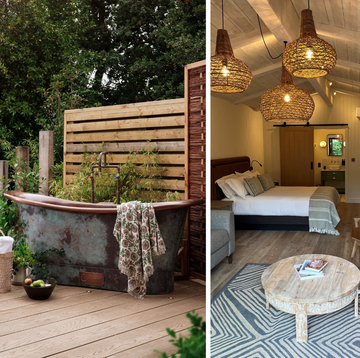
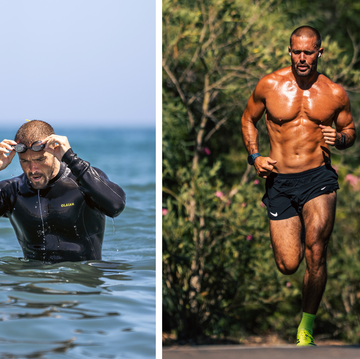
When it comes to feats of endurance, I’ve always fancied myself fairly low-maintenance. I’ve slept on a ping-pong table in a Stratford park between workouts during a 24-hour charity stint. I’ve camped in the back of a Mini Cooper on a multi-day mountain expedition. I’d say I actively avoid the fanfare and support of more organised events. A better writer would do something with ‘comfort being outside of my comfort zone’.
Which is why, when I was invited by luxury holiday company Sandals to take part in a multi-day endurance fundraising challenge in St Lucia, I actually took a bit of convincing. Once my partner was invited to cheer us on (and use the spa), however, the choice was out of my hands and my bags were packed.
The Sandals Foundation has been running its ‘Island Challenge’ for several years now. The brainchild of Sandals UK managing director – and avid marathon runner – Karl Thompson, it was created to raise serious funds for philanthropic projects across the Caribbean islands Sandals calls home. Beginning in Antigua in 2023 with a 100km run around the country, the challenge has since evolved into a multi-sport undertaking. This year was to involve running, kayaking, hiking and summiting one of the most iconic mountains in the Caribbean.
Before our 30-odd-strong group set off on this adventure, though, we first visited a local neonatal ward to see where this year’s money would go. I don’t usually need much motivation, but hearing hospital staff talk about the difference these funds would make to their ability to provide urgent, often lifesaving care for the most vulnerable humans helped steel my resolve throughout the miles ahead.
Day One: Baptism by Sun

Four days, four endurance challenges – kicking off with a 10km run, chased immediately by kayaking the same distance back down the coast. In my head I’d been labelling this one the ‘warm-up’. Unfortunately, ‘warm’ was the only accurate part of that assessment.
When we set off it was already pushing 30 degrees, but I paced myself for PB territory. Around 15 minutes in, the sun broke free from its lodgings behind the mountains and discomfort soared. I knew I wasn’t poised for peak performance when I could feel the sweat dripping off my fingers.
What to read next
The route was undulating – the kind of insidious rolling hills that look harmless but gnaw at your legs and resolve. Each hill ate away at my pace, and as the heat continued to rise, I struggled to make up ground on the rare flat I encountered. On reflection, this humble 10K’was the toughest part of the challenge.
The final leg dragged us mercilessly across a stretch of sand, straight into our two-man kayaks. I’d already run the numbers in my head and realised they were odd – and that most people had already partnered up. I quietly climbed solo into my two-seater and pushed off from the shore, relishing the temporary reprieve of the cool water.

Kayaking is one of those pursuits that I’ve tackled enough to be able to apply myself – but not enough to actually be efficient at. I found a rhythm, repeated a mantra and spent the next 90 minutes playing catch-up. Hamstrings grumbling, lower back creaking, shoulders on fire, I hugged the coastline to take tighter lines around headlands and even managed to reel a few boats in and make up some places. By the time I hit the shore 10km later, I could barely lift my phone to take a celebratory selfie.
Humbled, hungry, dehydrated and haunted by the word warm-up, day one was done.
Day Two: The Spine of the Island
Our second day started at 4am, as we headed into the rainforest for a four-hour hike. The trail we were to be following climbs steeply through dense forest, across the central line of St Lucia, before crossing the island’s spine and descending into the eastern territories. After a briefing I jostled to the front and pushed ahead, enjoying the scenery and silence – the high humidity making this feel more like swimming than rucking. After a while I doubled back, conscious that getting lost wasn’t off the cards.
Tracking along a narrow path, our grizzled guide threw up a hand. ‘Stop!’ He’d been clearing brush with a stick, eyes scanning the trail. A pit viper lay coiled at my feet, weighing its options. We gave it a wide berth, took a breath and pushed on across knife-edge ridgelines, clambering and helping each other up and over slick rock and root.
Hours later we spilled, drenched and grinning – thankfully bitten by nothing but mosquitoes – into the support vans on the far side of the island, legs and lungs exhausted from trekking directly through its heart.
Day Three: Half a Marathon (and a lot of hills)
Despite knowing I had a 3am alarm, I didn’t sleep well. The opening 10km had eaten me alive, so the prospect of running a half marathon, was keeping me up.

This time was different, though. A vicious wind and driving rain greeted us at the start line. Our collective prayers for cooler conditions had been answered.
Our route began by retracing the ground we had covered on day one, in reverse. I had to do a double take as I cruised past our previous start line at the 10km mark, in disbelief that I’d covered that much mileage already. It might have been less than halfway, but it felt half as hard as the run just a few days ago. Suitably motivated, I picked up the pace.
This time I wasn't risking dehydration or under-fuelling. Every 3km, like clockwork, I took in 30g of carbs and electrolytes via gels; at every aid station I downed enough water to get through to the next one comfortably.
Each aid station was staffed by local volunteers from across the island. I’m someone who prides myself on remaining chipper even when I’m in the bin on challenges like this, but even for me the energy from the support crew – the fist-bumps, the hugs, the dancing – dialled up my enthusiasm. It felt like being carried up the road.

The streets of Castries, the capital, were Sunday-quiet, but the air was getting thick as the sun started to make itself known, and I knew the hardest part was still to come: a serpentine drag of switchback hills, snaking upwards for around a mile, presenting hundreds of metres of elevation. My quads turned into lead pipes as they begrudgingly wheeled me all the way to the top. From there, it was a steep downhill race to sea level. The heavens opened, taking the edge off after the hills as I descended to the finish line.
The finish was a delirious Caribbean party: family, friends, my partner cheering me in; rain bucketing; a Perspex kayak full of ice and local Piton beer acting as a communal cooler. I very nearly dived in headfirst for the ice. Instead, I walked straight into the sea and let her sap the heat out of my bones.
Day Four: Chasing a Mountain GOAT
Up at 3:30 am, this was the one I’d been waiting for. This was where I was planning on hanging myself out to dry. After a 90-minute coach ride we arrived at the foot of Gros Piton, one of the two iconic mountains that form the St Lucian flag. At a little under 3,000ft it’s comparable to Mount Snowdon. The major difference is that it eats up this elevation in about half the distance – it’s steep.
I love a mountain and had planned on pacing this one recklessly. To my luck, I discovered that one of my fellow challengers – a local named Julian Toussaint – is a hill-running phenom, holding several records and quite literally having been born at the foot of this very mountain. I asked him if he was keen to pace me, something he has done professionally for the likes of Dame Kelly Holmes. He grinned. ‘You go for it, and I’ll try to hang on to your coattails,’ adding ‘Go hard, though.’
From the first yard I realised that the man I was chasing was no joke. At this pace, over this technical terrain, it was a question of what was going to break first – my spirit or my body. Julian floated. I clattered behind. The ladder-like gradient and the rainforest humidity turned my legs and lungs into laundry. Imagine doing sprint-pace walking lunges, uphill, on fire. At around the 50-minute mark, barely holding on, I looked at my watch – thinking about asking how much distance remained, wondering whether it was worth pushing harder if we were close to a sub-hour time – I bottled it, not wanting to know the answer.
After a perniciously steep section that required as much upper-body strength as it did legwork, I found myself on a plateau in a thick fog. Looking through a tunnel of trees I realised this wasn’t fog – it was cloud. I broke through onto a rock flat, the entire island opening in a 180-degree sweep below as the wind shoved the mist aside. There was nowhere else to go. We had summited. I dropped to a knee and tried to compose myself. The man whose slipstream I’d been chasing was smiling, completely unfazed; I looked like I’d just survived a shark attack.

Julian FaceTimed his wife. She asked whether he was alone. ‘No, I’m with a guy. If I was alone I’d have been up here ages ago,’ he said, completely unironically. I burst into laughter. I had put myself in a deep hole – but there are worse places to be utterly spent than a mountain peak overlooking a tropical paradise.
I jogged back down a stretch to film and ferry out some encouragement as the others topped out. We took our pictures, breathed in the view and then Julian pointed down.
The descent was faster, scarier, more fun. Downhill running on technical terrain demands every ounce of your attention; it’s a guaranteed flow state. Some people are critical of the risk–reward ratio, but I pace myself in smiles per hour, and sprinting down a mountainside always delivers.
Chasing Julian was like chasing smoke. A slip here could mean major dental work; it could also mean a rescue-team call-out. Even so, I looked up from my feet just long enough to realise my running mate was long gone.
I had donated my remaining water to a teammate and I was now courting dehydration. It was shit or bust now. I cleared back to the base in under 30 minutes. Not a moment too soon. Lying in the shade of a guava tree wondering how many orifices I could use for rapid rehydration, I euphorically watched the rest of our squad steadily roll back in.
More fist bumps, more high fives, more hugs. Some tears. We were done.
Pick Your Purpose
A week after we flew home, Storm Melissa hammered the Caribbean. As we were leaving, the Foundation team told us they’d already switched to crisis mode. Later a message came through: a five-figure sum that had been raised over the target had been used for disaster relief and had already, demonstrably, saved the life of a premature baby in the west of Jamaica.
I sat for a minute and thought about a conversation I’d had on day one. A doctor had told me that they were short on incubators – if more than three premature babies requiring urgent care come in at once, someone has to make a choice that no human should ever be faced with. People talk about impact and it’s easy to go numb. If everything is urgent, nothing feels urgent. But one baby – one life – is the opposite of abstraction. It’s a real reason to lace up, sweat through your shoes and get the taste of pennies in your mouth.
I was moved by what the Foundation does and by how quietly Sandals supports it. You feel that difference when you’re on the ground. You see it when a ward sister walks you to an empty space and tells you it could be an incubator next month. You carry it when your calves are cramping and the sun is trying to press you flat to the tarmac.
In March 2026, the Sandals Foundation delivered more than £100,000 worth of life-saving neonatal equipment to the Special Care Baby Unit at Millennium Heights Medical Complex in Saint Lucia – funded directly by the efforts of those four days. Ventilators, incubators, infant warmers and monitoring equipment are now helping care for around 180 critically ill newborns each year, supporting them through their most fragile first days. Just writing those words has me choked.
Turning fitness into funds has become ubiquitous in the last decade, and you know what? Long may it continue.
You can support the Sandals Foundation via sandalsfoundation.org

With almost 18 years in the health and fitness space as a personal trainer, nutritionist, breath coach and writer, Andrew has spent nearly half of his life exploring how to help people improve their bodies and minds.
As our fitness editor he prides himself on keeping Men’s Health at the forefront of reliable, relatable and credible fitness information, whether that’s through writing and testing thousands of workouts each year, taking deep dives into the science behind muscle building and fat loss or exploring the psychology of performance and recovery.
Whilst constantly updating his knowledge base with seminars and courses, Andrew is a lover of the practical as much as the theory and regularly puts his training to the test tackling everything from Crossfit and strongman competitions, to ultra marathons, to multiple 24 hour workout stints and (extremely unofficial) world record attempts.
You can find Andrew on Instagram at @theandrew.tracey, or simply hold up a sign for ‘free pizza’ and wait for him to appear.