Our product picks are editor-tested, expert-approved. We may earn a commission through links on our site. Why Trust Us?


The 11 Best Socks for Men, Tested by Style Editors
Put your best foot forward with a pair that combines form and function.
 Reviewed by Christian GollayanStyle and Reviews Director
SOCKS MAY BE an afterthought, but comfort starts from the ground up. Your feet carry you all day, and the right pair keeps them warm, dry, blister-free, and supported—whether you're running miles, commuting to the office, or dressing up in loafers. The best socks stay put, wick away moisture, prevent hot spots, and hold shape long after laundry day. And we would know: the Men’s Health team has been testing since 2018—well before the pandemic reset everyone’s wardrobe—wearing them to the gym, on hikes, across long travel days, and through weekend outings. Check out the criteria we considered, or use the table of contents to find your perfect pair.
Best Socks for Men
- Best Overall: Dickies Dri-tech Moisture Control 6-Pack
- Best Versatile Crew Socks: Everyday Extended Crew Sock
- Most Classic: Goldtoe 656s Cotton Crew Athletic Socks
- Best No-Shoe Socks: Hylaea No Show Running Coolmax Socks
- Best Ankle Socks: Bombas Solids Ankle Socks
What to Consider
Material
Great socks really come down to what they’re made of. The right material depends on where you’re wearing them and what you’re doing, whether that’s hitting the gym, heading to the office, going to a fancy dinner, or braving the elements.
Cotton
Soft and breathable—this is a classic choice for comfort in lounging and everyday wear, but they’re not as durable, shape-retaining, or performance-friendly as synthetic blends.
Synthetic blends
Strong, lightweight, moisture-wicking, and quick-drying. Unique blends with nylon, polyester, and spandex are often great for performance, stretch, and durability. This type is best for athletic socks, compression socks, and hiking socks.
Merino Wool
Naturally moisture-wicking, temperature-regulating, and odor-resistant—Merino wool keeps feet warm in winter and cool in summer. It's soft and not itchy like traditional wool.
Fit and Compression
A well-fitting sock shouldn't bunch, slide down, or feel too tight. Compression socks can improve circulation, while arch support or targeted compression can help reduce fatigue.
Thickness
Thick socks can sometimes add an entire size to your feet and make your shoe-wearing experience much more unbearable—unless you always size up for footwear—not to mention overheat your feet. On the other hand, socks that are too thin might not lend adequate protection, leading to blisters and foot pain. We recommend midweight socks because they can provide a good balance of comfort and support. A sock's thickness also denotes its weight, which is very personal. Some people like a heavier-weight sock with cushion to wear with a casual or lug sole shoe and others prefer lighter-weight with your oxfords or loafers.
Height
Sock height changes how your whole outfit reads and how your socks actually perform. The rise determines how much skin you’re showing (or not), how well your legs are protected, and whether your proportions look intentional or off. In other words: height matters. The “right” sock height ultimately comes down to personal taste—but it should always make sense with your shoes. Think about the shoes you’re wearing, the break of your pants (or shorts), and how much coverage you actually want. The right sock height can sharpen your proportions, prevent awkward gaps, and make the whole fit feel polished. When the proportions are off, the whole look feels off. Here’s how the main heights break down:
No-show socks
No-show socks are designed to disappear entirely, creating that sockless look. They still work with loafers and low-profile sneakers, but they’re more situational than they were a decade ago. If you’re wearing tailored trousers or slim silhouettes and want a clean ankle line, they make sense.
Ankle socks
Ankle socks land right at the ankle bone and are a natural match for gym sneakers and other athletic footwear. They pair naturally with running shoes and training sneakers, but outside of workouts, they can look dated.
Crew socks
Crew socks rise a few inches higher, usually sitting just below the calf muscle. Now they’re the default with everything from shorts and retro sneakers to loafers and relaxed tailoring. They’re versatile, visible, and can be either sporty or dressy.
Dress socks
Dress socks typically reach mid-calf or slightly higher, ensuring coverage when you sit and preventing any awkward flash of bare leg under tailoring.
Moisture Control
The best socks let your feet stay cool and breathable throughout the workday. Which is why you should preferably look for socks with moisture-wicking, AKA arguably the most important feature in socks. Having moisture-wicking socks is extra crucial if you're wearing them for sports, long walks, or any hardcore outdoor activities because wicking away sweat and keeping your feet dry are keys to reducing the risk of blisters and fungal infections.
Odor
Socks, for men especially, can easily become stinky due to sweat, bacteria, and other factors. Socks with odor-fighting properties keep the smell at bay and unnoticeable—by you or anyone near you.
How We Selected
We’ve been testing socks since 2018, and over the years, the Men’s Health team has rotated through more than 50 pairs across daily commutes, heavy leg days, long-haul flights, winter hikes, and 20,000-step city weekends. If a sock slid down, trapped sweat, thinned out at the heel, or lost its shape after a few washes, it didn’t make this list.
We evaluated what actually matters in real life: comfort, breathability, durability, and fit. That meant paying close attention to materials—soft but sturdy cotton for everyday wear, moisture-wicking synthetics that hold up in the gym, and merino wool that regulates temperature without overheating. Construction was non-negotiable. We looked for seamless toes that prevent rubbing, supportive arch bands that don’t feel restrictive, and cuffs that stay put without strangling your calves. And because socks shouldn’t fall apart after a season, we repeatedly washed and wore each pair to make sure they didn’t sag, pill, or thin out at the heel and toe.
We also tapped menswear expert Ted Stafford, who has styled countless MH covers and editorial shoots, to weigh in on proportion, height, and how socks should work with everything from tailored trousers to retro sneakers.
 Best Deal

Dickies Dri-tech Moisture Control 6-Pack

Pros
- Moisture-wicking and quick-drying fibers
- Breathable and soft against the skin
- Reasonably-priced
- Good for casual wear and workout sessions
- Perfect for construction workers, mechanics, warehouse personnel

Cons
- Don't recommend with tight footwear

For years, the Men's Health team has relied on Dickies for its solid, no-fuss workwear-meets-streetwear styles. In addition to well-built work pants, the brand's socks can go toe-to-toe (get it?) with just about every pair on the market, too. The fabric blend—71% cotton, 27% polyester, and 2% spandex—is an amazing trifecta, meaning they’re moisture-wicking, quick-drying, and odor-resistant. Plus, a little stretch goes a long way, ensuring the sock moves with you, not against you.
We found they're incredibly comfortable for casual wear and working out, thanks to their performance technology and superior arch support. They hit that perfect middle ground—they're not super thick, but they're not paper thin either. There's enough cushioning without making your feet feel bulky or overheated.
A lot of our testers didn't mind wearing them with boots, since the ventilation channels keep the air flowing around the clock. That said, they really come in handy for guys on their feet 24/7—construction workers, mechanics, warehouse personnel, etc. No slipping, no bunching, just all-day support. As for the price, it’s hard to complain when you can stock up with three packs under $50.
Read More: Best Cold Weather Socks
| Quantity | 6 pack |
| Material | 70% cotton, 28% polyester, 2% spandex |
| Type | Crew socks |
| Best for | Sports, training, physical activities, everyday, walking |
| Colors | 16 |
| Thickness | Lightweight |
Mack Weldon Everyday Extended Crew Sock

Pros
- Cushioned footbed
- Extended crew length provides extra coverage
- Available in single pairs and three or five packs
- Can worn with casual and dressy fits
Cons
- May feel a bit snug at the calf for some
These socks from Mack Weldon look cool in a way that goes just as well with a suit as they do with jeans and sneakers. Besides looking nice, the best part about these socks is their odor-fighting properties. Mack Weldon infused the Pima cotton with silver fibers that are naturally antimicrobial. They're using a little basic chemistry to keep your feet smelling good all day. We also love how they absolutely will stay on and won't slide down even after a whole day of wear thanks to the stay-put cuff of these socks.
In our testing, we found that Mack Weldon’s crew socks are also great for walking, courtesy of the cushioned footbed. The extended length provides extra coverage and warmth for your legs on cooler days, too. And since both the toe and heel are seamless, coupled with an ultra-soft fabric, the comfort in these socks will keep your legs and feet feeling good all day long.
| Quantity | 1 pair, 3 or 5 pack |
| Material | 85% combed cotton, 10% spandex, 4% nylon, 1% elastic |
| Type | Crew socks |
| Best for | Everyday, wearing with dress shoes and boots, walking |
| Colors | 8 |
| Thickness | Light-medium weight |
Gold Toe 656s Cotton Crew Athletic Socks

Pros
- AquaFX moisture control that helps wick away sweat
- Reinforced toe for long-term durability
- Produced with a hint of stretch
- Full cushioned foot and smooth comfort
- Machine-washable
Cons
- Can feel a little tight in some shoes
There isn't a sock quite like a Gold Toe. While holding the throne as the ultimate dad sock for the past 80 years, they have also started to make their way back into fashion in a big way. These updated classics, for instance, are made from a slightly thick blend of wool and nylon, and boast AquaFX Moisture Control that helps wick away sweat throughout the coverage area to help you stay fresh, cool, and dry. The ribbed construction also provides extra support and warmth, while the stretch will help the socks fit perfectly on your feet. We also love the reinforced toe that ensures no hole, wear, or tear will happen for a long time.
In my testing, I found that while these indeed are cushy and warm—and thus work great as winter socks—they are quite thick, which is why I love wearing them to fill up the space in my boots or dress shoes, but sometimes for sneakers and athletic shoes, the thickness can feel very tight. And unlike other socks, these don’t slide down even on large calf muscles.
| Quantity | 6 or 12 pack |
| Material | 81% cotton, 18% nylon, 1% spandex |
| Type | Crew socks |
| Best for | Cold weather, everyday, wearing with boots, sports |
| Colors | 11 |
| Thickness | Midweight |
Hylaea No Show Running Coolmax Socks

Pros
- Moisture-wicking and anti-odor protection
- Mesh ventilation increases level of breathability
- Seamless toe construction
- Comes in a variety of colors
Cons
- Not ideal if you want more coverage for your leg
No-show socks exist for one simple reason: to give you that clean, sockless look without the sweaty, blister-filled nightmare of actually going sockless. Enter this athletic, moisture-wicking pair made with Coolmax fiber, which helps keep perspiration in check when you're cycling, lifting, or running. Speaking of those activities, we also appreciate the seamless toe closure to prevent yarn chafing and discomfort while on the move. The light compression comes in handy, especially for runners, stimulating blood flow and providing a more snug fit.
Sport-use aside, we found them to offer durability and excellent cushioning for casual wear. Bonus: Mesh ventilation on the instep ensures superb breathability from toe to heel. Plus, the three-pack is available in a variety of bold pairings (colors include orange, green, and blue).
| Quantity | 3 pack |
| Material | Polyester, spandex, cotton |
| Type | No-show socks |
| Best for | Running, sports, training, physical activities |
| Colors | 21 |
| Thickness | Lightweight |
Bombas Solids Ankle Socks

Pros
- Extra-long staple cotton
- Honeycomb support system hugs your arch for secure feel
- Seamless toe ensures no pressure points or weird bunching
- Blister tab prevents painful rubbing
- Cushioned in the footbed and sole
Cons
- Sizes sell out often
Ask any sock aficionado their favorite sock brand and there's a good chance they’ll say Bombas. If you’re wondering what makes its socks so special, the answer lies in the ultimate combination of smart design details and high-quality fabric. The brand takes all your needs into consideration with extra-long staple cotton fabric, which is longer and smoother than regular cotton. That means it's softer, stronger, and more durable—it resists pilling, holds color better, and feels luxuriously comfy against your skin.
On top of that, its made with seamless toe construction to eliminate pressure points, and even a little fabric tab at the back to prevent pesky, painful blisters. Plus, the honeycomb support system gives your arch a snug, supportive hug—keeping your feet feeling secure and energized all say. Overall, it helps distribute pressure evenly, so you're not dealing with sore, tired feet, whether you're running errands or running miles.
In our testing, we found that these are—by far—the comfiest ankle socks we've tried. We love that their stretchiness doesn’t seem to decrease despite tons of wear and washes. They’re also very versatile, great for walking thanks to the cushioned footbed as well as training at the gym—although they’re not as robust as actual workout socks for training.
| Quantity | 1 pair (4, 8 or 12-pack) |
| Material | 77% cotton (Supima) 16% polyester, 4% nylon, 3% elastane |
| Type | Ankle socks |
| Best for | Everyday, walking |
| Colors | 4 |
| Thickness | Midweight |
Balega Hidden Comfort No-Show Running Socks

Pros
- 200 needle-count yarn means more durable fabric
- Excellent moisture management
- High heel tab prevents slipping
- Smoother texture against the skin
Cons
- Can be a bit too thick for runners in hot weather
If there was a superhero version of a no-show sock, it would be this Balega option, and we especially approve of its usage in running. Made with 200 needle count yarn, it's made with a fine-gauge knitting process, resulting in smoother, denser, and more durable fabric. With impact-resistant plush cushioning in the ball and heel of your foot, each step you take becomes a breeze, regardless of your speed.
Having jogged in Central Park in these socks a few times, we found that the moisture management fiber also keeps your feet cool and dry all day long, while the seamless, reinforced toe minimizes the risk of blisters by reducing friction.
Off the track, however, our testers found that these socks are also great for playing sports, working out, doing yard work, or simply enjoying the comfort of your own home. The ventilation panels in the fabric ensure optimal airflow while the high heel tab and deep heel pocket prevent slipping—and we love that it’s extra stretchy—meaning they’re perfect for anything involving heavy foot motion.
| Quantity | 1 pair |
| Material | Drynamix polyester, nylon |
| Type | No-show socks |
| Best for | Running, sports, training, physical activities |
| Colors | 13 |
| Thickness | Lightweight |
lululemon Men's Power Stride Tab Socks

Pros
- Designed for intense training
- 360° arch support
- Doesn't show in some sneakers
Cons
- Tends to sell out quick
Hard training calls for socks that can keep your feet feeling good rep after rep. After all, they're putting in the work, too. Not only are these ankle socks made largely of breathable nylon and stretchy Spandex, but they also have full arch support and use the 3D-knit PerformaHeel to provide a contoured fit that definitely won’t slip, no matter how intense your movements are.
Overall, with 360-degree arch support, seamless toe construction, and a 3D-knitted heel, our testers love that these Lululemon socks have just the right amount of stretch and cushion for a supported, frictionless fit. We've noticed less chance of chafing when we sport these for a high-intensity workout or run. The heel is also complete with an extra-long fabric tab, so not only will you avoid a blister on your Achilles area, but you also won't have to worry about these slipping down while you run either.

Features at a Glance
| Quantity | 3 |
| Material | 95% Nylon, 5% Lycra Elastane |
| Type | Ankle |
| Best for | Sports, training, physical activities, everyday |
| Colors | 1 |
| Thickness | Lightweight |
Hanes Premium X-Temp Compression Crew Socks

Pros
- Adapts to your body temperature
- Produced with graduated leg and arch compression
- Moisture-wicking
- Perfect to use after runs and during flights
Cons
- Can feel a little too snug if you're not used to it
Compression socks support and stabilize your muscles, while boosting circulation by directing blood back to your heart. That’s why this pair from Hanes is totally worth it. For starters, the cotton-polyester-nylon blend is super soft and comfortable against the skin. The cushioning offers extra padding and softens each step, so your feet and joints take less of a beating from hard-hitting moves—think running, jumping, or intense workouts. These socks also are made with a performance fabric treatment that wicks away moisture and regulates temperature to keep your feet cool as a cucumber.
Plus, the arch compression keeps your foot firmly in place, which is a lifesaver if you overpronate or struggle with heel issues. Our fitness editors have worn these for leg recovery after intense workouts and running the New York marathon. After slipping them on, their calves and arches instantly felt refreshed.
| Quantity | 3 pack |
| Material | 49% Polyester, 39% Cotton, 8% Nylon, 4% Spandex |
| Type | Compression socks |
| Best for | Workouts, long flights, marathon runs |
| Colors | 2 |
| Thickness | Midweight |
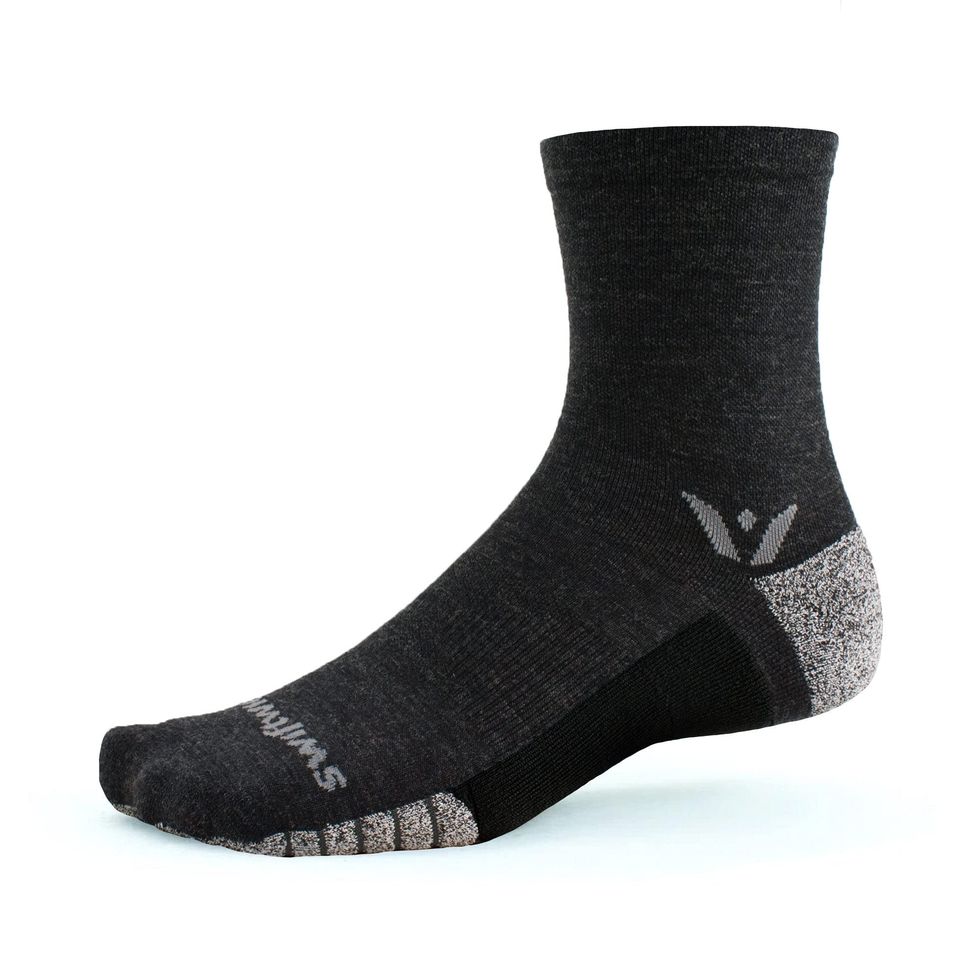
Swiftwick FLITE XT Trail Mid-Crew Socks
Pros
- Proprietary GripDry Fiber at the heel and forefoot
- AnkleLock technology provides a flexible, yet snug fit
- Temperature-regulating and moisture-wicking
Cons
- Limited color selection
A past-winner of our Outdoor Awards, Swiftwick socks are truly great when it comes to performance—specifically for hiking and trail running. The Proprietary GripDry Fiber at the heel and forefoot works almost like a shoe outsole's traction to keep you steady—it’s got enough grip for anyone who wants to deadlift sans sneakers. The AnkleLock technology provides extra stability around the ankle, so the fit is super secure at all times. Apart from temperature regulation, the Merino wool blend fabric is also made to keep you blister-, odor-, and sweat-free.
In fact, our testers—some of whom are ultramarathon athletes—have even sported this pair to chase a 43-mile, insane mountain record on the tallest volcano in North America. They claimed the socks performed flawlessly with no cold feet, no discomfort, and no holes. In terms of breathability, the mesh upper keeps your toes feeling cool as a cucumber. The flex channels enhance mobility, meaning your socks move naturally with your foot instead of feeling restrictive, which is crucial when tackling uneven terrain on the trails. And the Y-shaped heel works hand-in hand with these channels, creating a contoured, stay-put fit that keeps the sock in place.
| Quantity | 1 pair |
| Material | 38% nylon, 24% Merino wool, 22% olefin, 13% polyester, 3% spandex |
| Type | Crew socks |
| Best for | Trail running, hiking, training |
| Colors | 3 |
| Thickness | Midweight |
Uniqlo Colorful 50 Socks

Pros
- A single pair is priced under five bucks
- Odor-fighting yarn keeps smells in check
- Soft, stay-put elastic won't dig or leave marks
- Available in more than 50 colors
Cons
- Limited in patterns
Uniqlo, a Japanese clothing retailer, has built a rep for making high-quality basics at unbeatable prices, and its Colorful 50 socks are no exception. These budget-friendly essentials come in every shade imaginable, so whether you're into classic neutrals or bold hues, I can guarantee there's something here for you. Made with special deodorizing yarn, they help keep odors in check, while the ribbed texture adds a nice touch of detail.
I've worn it with casual wear for a day of shopping and night out with friends. But no mistake, this pair can serve as a dress sock as well. I've also wore it to fancy dinners and galas—that is colors that weren't super loud. After putting this sock through the wringer, literally, it was also evident the unique fabric blend could retain its shape after a number of cycles in the wash. Plus, the non-constrictive elastic means they stay out without digging in or leaving those annoying sock marks.
Features at a Glance
| Quantity | 1 pair |
| Material | 41% cotton, 37% polyester, 13% nylon, 7% acrylic, 2% spandex |
| Type | Crew socks |
| Best for | Casual wear, dressy occasions |
| Colors | 50 |
| Thickness | Light-midweight |
Banana Republic Purple Trouser Socks (3 Pack)

Pros
- Looks great with semi-dressy attire and tailored suits
- Comes in solids and different patterns
- Breathable and smooth
Cons
Fancy occasions and formal settings call for a step up from your everyday socks. Thats where Banana Republic's dress socks come in clutch—polished, breathable, and perfect for any upscale event. Produced by a soft cotton blend, this pair arrives in solids and all kinds of patterns: argyle, houndstooth, polka dots, and stripes. We've paired it with everything from a tailored suit and dress shoes to a sweater and trousers. Though, this is not to say, you can't wear them with a chill fit, but we reserve these socks for things that require a little more sophistication.
Unlike some dress socks that start slouching by midday, these stay put, so you're not constantly adjusting them. Even though they don't have seamless toe construction like some premium pairs on the list, the angled toe seams are surprisingly smooth—no irritation, no awkward bunching. And with just the right amount of stretch, they move with you and keep their shape, so you're never dealing with saggy or stiff socks. Whether you're getting dressed for a board presentation, a charity gala or a loved one's nuptials, these socks elevate your look without sacrificing comfort.
Features at a Glance
| Quantity | 3 |
| Material | 64% cotton, 22% nylon, 13% polyester, 1% spandex. |
| Type | Dress Socks |
| Best for | Casual, Dressy occasions |
| Colors | 3 |
| Thickness | Lightweight |

Frequently Asked Questions
What Are the Best Socks to Avoid Foot Odor?
The best socks to keep smelly feet at bay are often moisture-wicking, breathable socks. Materials like Merino wool, bamboo, and synthetic blends are effective at keeping moisture away from your skin, which can help reduce odor. Socks with good ventilation (like mesh panels for airflow) also allow your feet to breathe. Some socks are treated with antimicrobial agents like silver or copper, which can inhibit the growth of odor-causing bacteria.
Do Expensive Socks Make a Difference?
In short: Yes. We’re not saying that you have to splurge upward of three digits on socks, but more expensive socks are often better at comfort and durability. This is true, especially for thin socks: the material of the cheaper socks usually won't last and is prone to wear and tear, and the pilling will look bad. On the other hand, expensive socks made with high-end materials like merino wool, cashmere, or unique cotton are often of higher quality which can contribute to a more pleasant wearing experience.
Are Thin or Thick Socks Better?
Depending on your personal preference, the climate, the desired use, as well as your own feet, both thin and thick socks have their own advantages. Thin socks are usually more breathable and better at wicking away sweat and are thus great for combating foot odor. Think socks are also preferred for warm weather. On the other hand, thick socks are your winter socks, providing better insulation and warmth. Thick socks often have better underfoot cushioning and padding as well, meaning they will help reduce friction in shoes or during long walks.
More About Our Favorite Socks
Best Cold Weather Socks | Best Running Socks | Best Athletic Socks for Men | Best Moisture-Wicking Socks | Best No-Show Socks for Men | Best Socks on Amazon | Warmest Socks | Best Merino Wool Socks | Best Compression Socks | Best Hiking Socks | Best Wool Socks
As the Style and Reviews Editor for Men's Health, Joseph covers all-things fashion and grooming. Previously, Cheatham was a commerce editor for Spy, and he has written for Travel + Leisure.
Christian is the Style and Reviews Director at Men's Health and Women’s Health, where he oversees shopping and style content for both brands. He started his magazine career as an accessories assistant at Vogue, and has since held editorial roles at Tatler Asia and The Manual. When he’s not online shopping, you can find him on long walks with his two corgis.

Style Editors Say This Underwear Doesn't Ride Up

The Absolute Best T-Shirts a Guy Can Own

We Found the Best Sunglasses for All Face Types

The Most Flattering Shorts You Can Possibly Wear