The 11 Best Whey Protein Powders for Muscle Gain, Tested by Us
One protein powder type reigns supreme when it comes to muscle-building, and it rhymes with 'hay.'
 Reviewed by Paul Kita
WALK THROUGH THE aisles of any supplement store, and you'll see a wide variety of protein powders. From organic, hemp-based, and pea protein, to powders with creatine and even some that taste like breakfast cereals—it's hard to know which ones are right for your needs. But among this sea of protein powders, there is one category that stands out when it comes to building muscle. If you're looking to gain lean mass and support muscle recovery, whey protein powder is the way to go.
What makes whey protein powder so superior? Science. Research suggests that consuming whey protein powder in conjunction with a resistance training program can help you maintain lean body mass and promote strength. So if you're looking for the best whey protein powder to try in 2026, we got you.
Best Whey Protein Powders

What to Consider
No matter what kind of supplement you're buying, know that the U.S. Food and Drug Administration doesn't regulate it. So, basically, a protein powder manufacturer can put a whole bunch of ineffective (or, worse yet, dangerous) ingredients into a tub of the stuff and sell it slapped with a bunch of false promises.
Supplements can, and have been known to, contain banned substances (anabolic agents, stimulants, etc.) that can get you kicked off the team, undisclosed ingredients (caffeine, witch hazel, etc.) that may be harmful if you’re on medication, and/or false promises to “cure,” “treat,” or “lessen” disorders/diseases.
That's why you should always look for a protein powder that carries a third-party certification from the likes of a legit testing service, such as the NSF, USP, or Informed Choice. You don’t have to worry here—all of the protein powders on our list are third-party tested. When shopping for a certified whey protein powder, there are several other factors that you should considers.
BCAAs
The best whey protein powders deliver a wide range of amino acids, known as the essential building blocks. When we eat protein, what we're left with is amino acids (among other by-products). They're used to break down other things we eat, to grow, to help repair tissue, and for many other essential bodily processes.
There are a total of 20 amino acids, nine of which are essential, meaning the body cannot produce them adequately on its own and must get them from food. Whey protein is known as a complete protein because it contains all essential amino acids, unlike plant-based protein sources (such as pea or hemp proteins), according to Marie Spano, RD, a sports nutritionist for the MLB. One amino acid is especially important for gains: Leucine is needed to 'turn on' muscle building at a cellular level, according to Mike Roussell, Ph.D., author of The Metashred Diet.
That's not to say plant-based proteins can't be a good option, particularly if you're vegan or to dairy products. Pea protein is a decent pick, as it's the only plant protein that can provide all essential amino acids on its own (as in, without being combined with another plant-based protein). But when you’re looking at whey proteins, ensuring the product you choose contains at least 2 to 3 grams of leucine is key.
Protein Content
Most high-quality options will contain between 20 to 30 grams of protein per scoop—but don’t just assume more is always better. Consider how the protein amount fits into your overall daily intake. For muscle-building purposes, aim for at least 20 grams of protein per serving with a solid leucine content (around 2 to 3 grams), which helps kick-start muscle protein synthesis. Bottom line: A scoop that gives you at least 20 grams of protein with minimal fillers is a smart pick.
Type of Whey
Whey protein comes in three main forms: whey protein concentrate, whey protein isolate, and whey protein hydrolysate. Whey protein isolate and hydrolysate are more processed and have a higher protein content, but they also tend to be more expensive. Whey concentrate is typically less expensive, but it isn’t processed as heavily as whey isolate or hydrolysate, which means it may not be as easy for your body to absorb and it may contain more lactose (which is an important consideration if you’re sensitive to dairy products).
Fat and Carbs
While whey protein powders are generally low in fat and carbs, there can still be big differences between brands. If you're looking to lean out or keep calories tight, go for an isolate-based powder with 0 to 2 grams of fat and fewer than 5 grams of carbs per serving. If you're using your protein shake as a meal replacement or post-workout fuel, a few extra grams of carbs (especially if coming from whole food sources or natural sweeteners) can actually help replenish glycogen and support recovery. Always scan the label, so you know what you’re putting in your body—and why.
Additives and Sweeteners
Some whey protein powders contain additives and sweeteners that you might be looking to avoid, such as artificial sweeteners and colors, soy, gums, and/or gluten. Generally, the fewer ingredients, the better.
Flavor
Consider the flavor of the powder—this is one of the biggest factors that will impact whether you consistently consume it or not. After all, meeting your protein needs shouldn't be a gag-worthy experience. We recommend reading reviews on any specific flavor you're shopping (we may have the information you need right here), or buying a test packet or at least a smaller tub to try first.
Price
Compare prices between different brands and types of whey protein to find the best value for your money. Keep in mind that higher-priced powders may offer higher protein content, a whey isolate or hydrolysate (instead of whey concentrate), and fewer additives, but that's not always the case. In general, you can expect prices to range from about $1 to $2 per serving.
How We Chose
Our team of fitness and nutrition editors started by collaborating with experts on where to start for whey protein powder recommendations. We began with the most popular and trusted brands in the market, while also considering all recently released products. These whey protein powders were tested in protein shakes before and after workouts. They were tasted in the context of customized smoothies, as well as simply blended into mixers like water or milk.
For this story, we called on experts including Mike Roussell, Ph.D., author of The Metashred Diet, and Marie Spano, RD, sports nutritionist for Major League Baseball. Our product recommendations are purely editorial, and while we may receive free products to test and review, we only recommend the products we are most impressed by. We never let retailers or public relations contacts dictate our content or product coverage. Below are the 11 best whey protein powders, based on our research and testing.
 Best Deal

Transparent Labs Whey Protein Isolate

Pros
- Silky smooth consistency
- High protein content
- Formulated with athletes in mind

Cons
- Pricey per serving

Transparent Labs 100% Grass-Fed Whey Protein Isolate is the serious contender in the whey protein arena, packing 28 grams of muscle-building, recovery-boosting whey protein isolate in every serving. (Most whey powders ring in at 20 to25 grams per serving.) Aside from protein, the nutritional profile is great, keeping the carb and fat levels in check with 0 to 2 grams of carbs and 0 to 3 grams of fat per serving (depending on the flavor).
And take note of the flavor variety—16 mouthwatering options that cater to almost every palate. Our favorite is the strawberry milkshake flavor, which tastes exactly like its name. It's also all-natural, with no artificial sweeteners, dyes, or preservatives in the mix. The ultra fine powder dissolves easily in water or milk. Plus, it has an Informed Choice third-party certification to back it up.
Sure, the cost is a bit steeper than other options on the list. But when you consider the quality of ingredients that you are getting, it is worth it in the end.
| Flavors | 15 |
| Number of Servings | 30 |
| Nutritional Profile (per Serving) | 28g protein, 0g fat, 1g carbohydrate, 120 calories |
| Price per Serving | $2 |
| Protein source | Whey protein isolate |

Pros
- Well-balanced nutritional profile
- Contains BCAAs to support muscle recovery
- Informed Choice certified
Cons
- Contains soy, which may not be suitable for those with food sensitivities
Think of this whey protein as a reliable and budget-friendly choice—no frills, just a solid macro profile. What's great about it is that it skips added sugars (though it does include two artificial sweeteners, sucralose and acesulfame potassium). It's straightforward, offering whey protein and digestive enzymes, making it a pocket-friendly option for those who want a no-nonsense whey protein supplement, as pointed out by Roussell.
One scoop packs 130 calories and 24 grams of protein, plus it's Informed Choice certified. If you're hitting the gym hard, you'll appreciate the over 2 grams of leucine per scoop—a crucial amino acid that's like a boost button for muscle growth and repair. The protein blend includes whey isolate, concentrate, and hydrolysate, with the majority coming from whey isolate.
We've tried a few flavors, including double rich chocolate, which has a rich taste without any artificial smell or lingering aftertaste. But if chocolate isn’t your thing, there are 22 other flavors for you to choose from. Optimum Nutrition is known for its flavor variety, which honestly just seems to grow year after year.
One small downside is that it can run a bit thin when mixed with water. For a creamier and more satisfying experience, consider blending it with your milk of choice, or even adding a banana into the blender. It also contains artificial sweeteners, which some individuals may opt to steer clear of.
Read more: Best Creatine Supplement
| Flavors | 12 |
| Nutritional Profile (per Serving) | 24g protein, 1.5g fat, 3g carbohydrate, 120 calories |
| Price per Serving | $1.72 |
| Protein Source | Whey protein isolate and whey protein concentrate |
| Sweetened | No |
Thorne Research Whey Protein Isolate

Pros
- Dissolves easily
- NSF Certified
- Tastes great
- Contains less sugar than comparable sweetened options
Cons
- Pricey
- Sweet aftertaste, not for everyone
This protein powder’s texture impressed s with its velvety and thick consistency when blended solely with water. If you prefer a powder with a more substantial body or are often looking for something you can shake up with water from a drinking fountain, this is a great option.
This whey protein isolate is simple and straightforward, formulated with natural flavors and plant-derived sweeteners to taste great. Our editors like the vanilla flavor for its milkshake flavor and easy-to-blend quality. Yes, it's sweetened, but less so than many comparable products, as the brand utilizes a blend of cane sugar and stevia for a lower sugar content (just one gram of added sugar per serving). We love that it avoids artificial sweeteners or sugar alcohols, which can trigger stomach discomfort in some individuals.
The protein powder also contains 21 grams of protein sourced solely from whey isolate, making it an excellent choice for individuals with lactose sensitivity.Plus, it’s NSF certified. It’s worth mentioning the aftertaste, which may not be to everyone's liking. This product contains stevia, which can be a point of contention for some consumers.
Read more: Best Multivitamins for Men
NAKED Nutrition Whey Protein Powder

Pros
- Contains zero sugar
- Free of additives
- Smooth texture
- ACTUALLY flavorless
- Informed Choice certified
- High protein per serving
Cons
- Not a great choice for mixing with water alone
- This whey protein concentrate contains more lactose than other isolate or hydrolysate wheys you can find on this list, which is worth noting for lactose-sensitive protein hunters
The unflavored Naked whey protein powder strips everything out but the whey itself—there are no additives or sweeteners. The powder doesn't have an aftertaste or a gritty texture, making it undetectable when blended into shakes and smoothies. The whey isolate in this powder hails from grass-fed, hormone-free cows and boasts certification by the third-party testing company Informed Choice. It contains 25 grams per scoop for 120 calories.
For those who want some flavor mixed into their smoothie or milk, this powder is also available in vanilla, strawberry, chocolate, chocolate peanut butter, and double chocolate varieties, which are sweetened with coconut sugar, a low-glycemic sweetener.
The consistency is smooth, although a smidge of sediment may hang out at the bottle's bottom. If you’re someone who prefers a protein powder that can be knocked back on-the-go after mixing with water alone, the unflavored option might not be for you.
Read more: Best Protein Bars
Onnit Whey Isolate Protein, Grass Fed

Pros
- Grass-fed
- Low in sugar
- NSF Certified
- Tastes amazing (Mexican chocolate flavor especially)
Cons
- Lower protein per serving than some other options
- On the pricier side
Derived from New Zealand grass-fed cows, Onnit Grass-Fed Whey Protein gives you the whole amino acid package, too. It also carries the heralded Informed Choice seal, which means that what's advertised on the label is exactly what's inside the jug.
We love that one serving is just a single scoop, meaning it mixes easier than some powders that require multiple scoops per serving. However, it contains 20 grams of protein per serving, which is slightly less than the 25 grams most comparable powders deliver. Besides the protein, this stuff comes armed with a bunch of probiotics, possibly giving your immune system and digestion a little boost in the short term.
There's also a digestive enzyme blend featuring protease and papain that may aid digestion. This is a reliable pick for grass-fed protein, but you can find more budget-friendly options out there. It's also sweetened with low glycemic index ingredients like monk fruit and stevia, which some may dislike the taste and aftertaste of.
Dymatize ISO100 Whey Protein Powder


Pros
- Great nutritional profile
- Hydrolyzed protein is easily digested
- Unbeatable variety of flavors
Cons
- Limited servings per container
From cereal to coffee, Dymatize boasts some of the widest flavor varieties we have seen: chocolate peanut butter cup, Dunkin’ glazed donut, Fruity Pebbles. And they’re all delicious."Dymatize ISO100 is literally the only protein I use, because its nutritional profile is great," says Ebenezer Samuel, C.S.C.S., MH Fitness Director.
The combination of whey protein isolate and hydrolyzed whey protein isolate delivering deliver 25 grams of protein.This product is noted for its low-fat and low-carb content, which makes it suitable for those aiming to maintain a lean diet. Additionally, it contains 5.5 grams of BCAAs and 4.4 grams of glutamine, promoting enhanced muscle growth and quicker recovery.
This protein powder also carries the Informed Choice certification, providing athletes with confidence in its quality. While hydrolyzed protein, as found in Dymatize ISO 100, is more easily digested by the body, there's limited evidence supporting claims of faster muscle and protein synthesis compared to intact proteins.
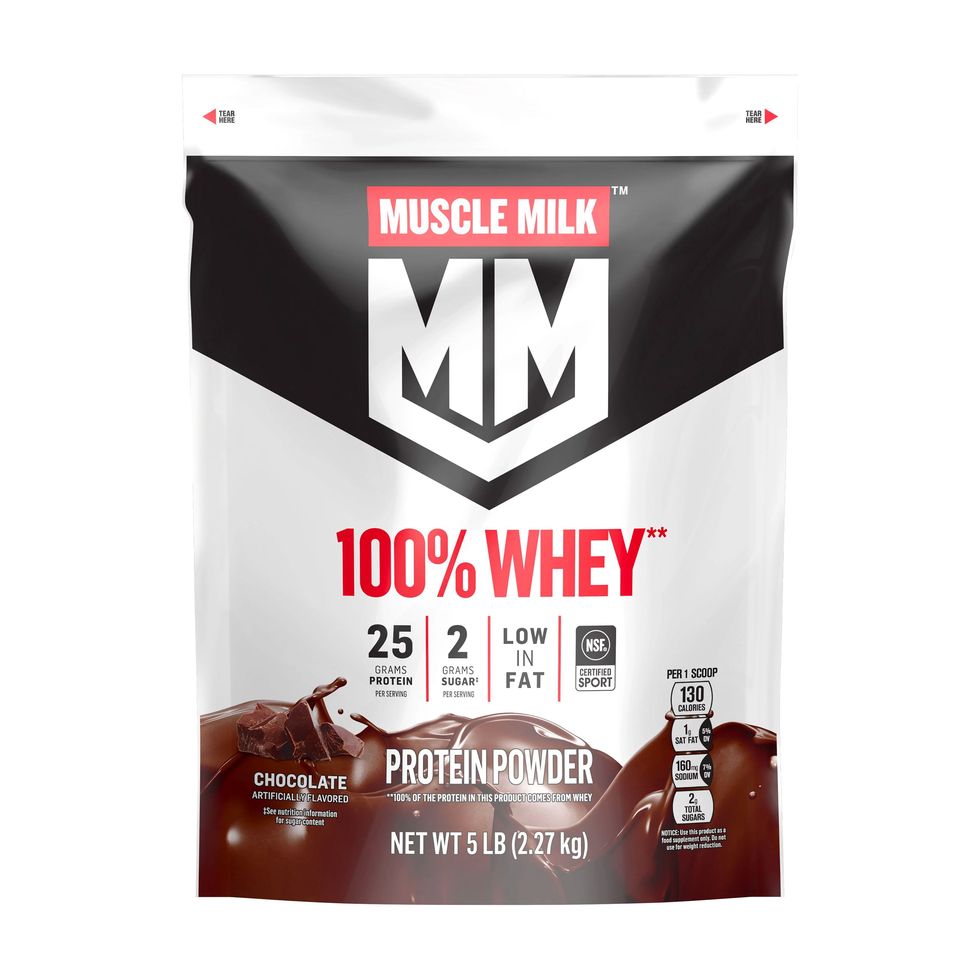
Muscle Milk 100% Whey Protein Powder
Pros
- High protein per serving
- Great price
- NSF Certified for Sport
Cons
- Only two flavors available
- Contains soy
Despite how affordable it is, this formula is NSF Certified for Sport and offers a solid 25 grams of protein per serving. Offering a combination of concentrate and isolate, one scoop per shake can help stretch your dollar without compromising on quality.
We like that it comes from the tried and true Muscle Milk brand, but with its new and improved formula that’s lower in calories and fat than previous iterations. This powder is sweetened with sucralose, a sugar alcohol with a lower glycemic index than cane sugar.
It is sweetened with sucralose, a sugar alcohol which has been known to cause an upset stomach in a small portion of the population. So be aware if you know sugar alcohols don't sit well with you. The carb content is also higher than most other powders on this list, clocking in at 8g per serving. This could be good for some people, and not so good for others, depending on what your desired carb intake is.
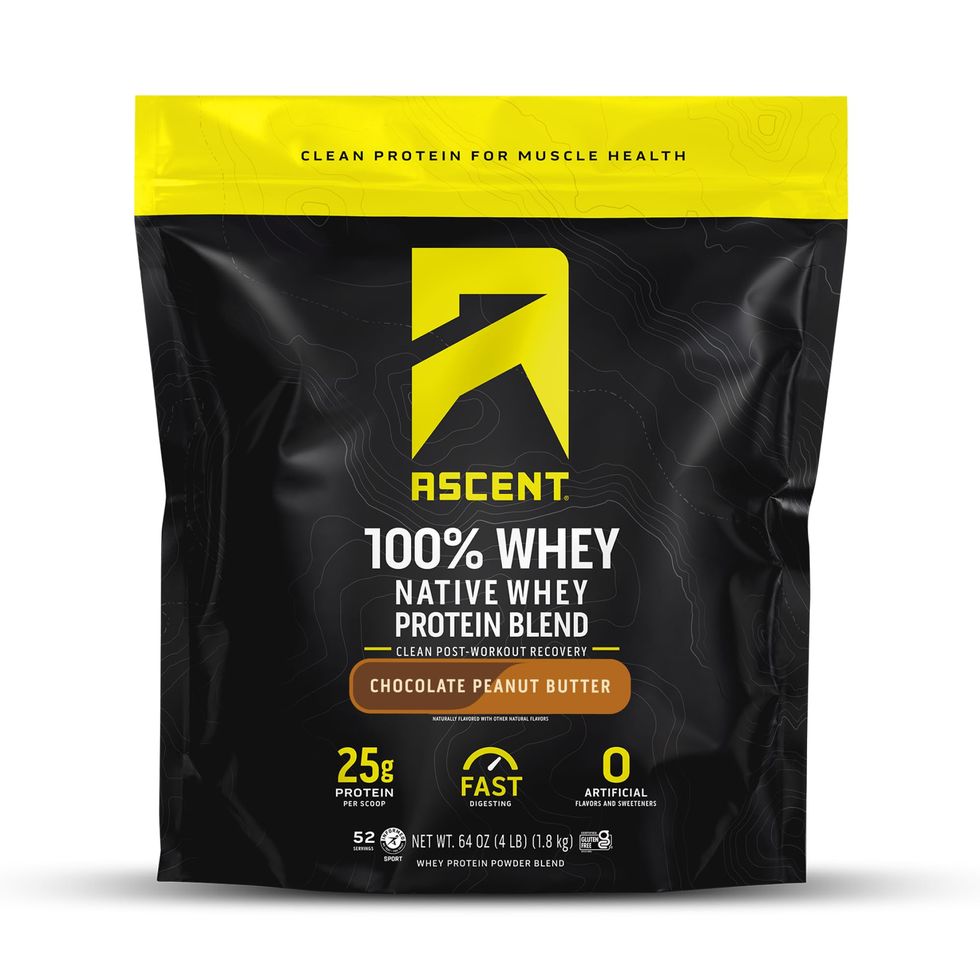
Ascent 100% Whey Protein Powder
Pros
- Contains unadulterated native whey protein
- Reasonable price per serving
- Good consistency even when mixed with water alone
Cons
- Higher carb content than most powders (a pro, for some)
It’s whey protein in its most natural form, without the typical processing most competitors put their whey products through. Couple that with the fact that they don’t use any artificial ingredients, and you have one of the most natural whey products on the market. Plus, you're getting a solid 25 grams of protein per serving.
The flavor options are pretty generous, with nine different choices available, including an unflavored. When it comes to packaging, you can go for the 2- or 4-pound bags or grab single-serving packets.The chocolate peanut butter is our favorite, which is unexpectedly creamy even when mixed with water.What's cool about this powder is that although it's sweetened with stevia, it doesn't leave you with a strong aftertaste like most similar powders do.
It carries the Informed Sport certification. Keep in mind this powder is made in a facility that handles tree nuts and peanuts. So if you've got allergies or need your products to be soy, tree nut, and peanut-free, this might not be for you. It’s also a bit higher in carbs than some other powders on this list (likely due to the blend that contains whey concentrate)—its 5g of carbs per serving isn’t necessarily a huge deterrent, but it’s definitely worth mentioning for those watching their macros closely.
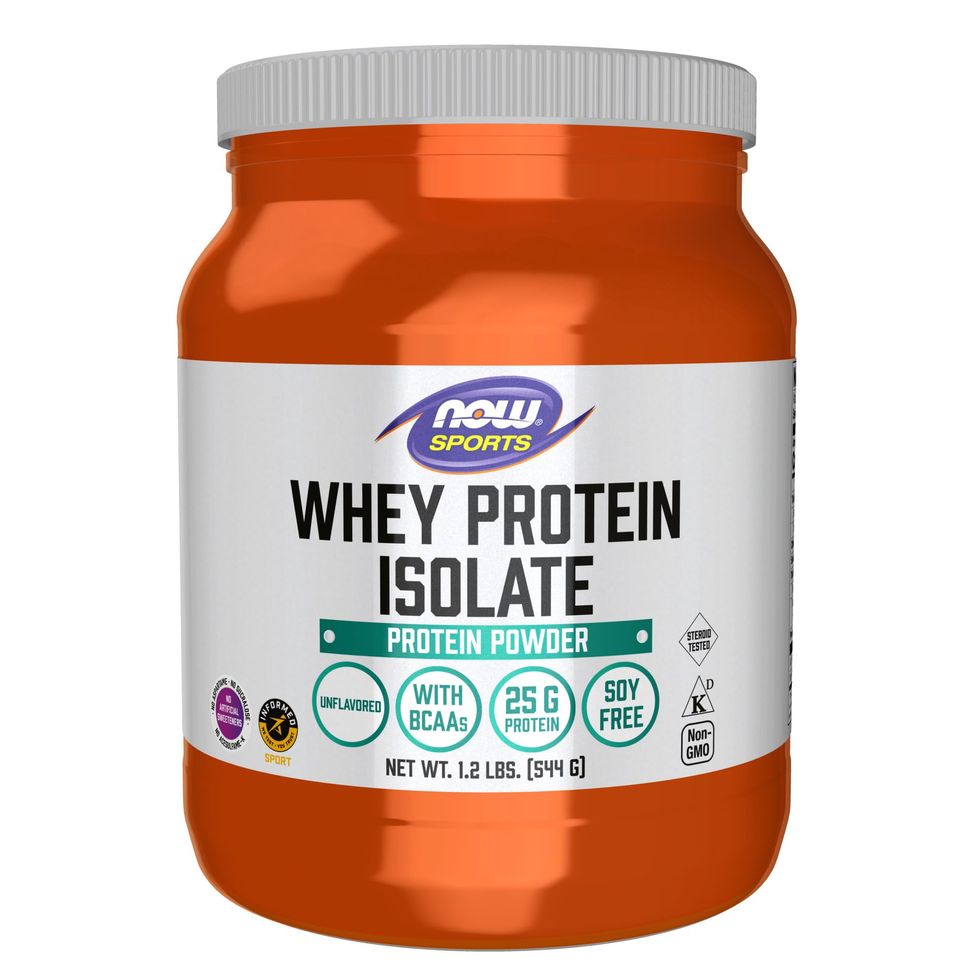
NOW Sports Whey Protein Isolate
Pros
- Reasonable price
- Works well in smoothies, oatmeal, and baked goods
- Unflavored option contains no sugar or sweeteners
Cons
- Limited servings per container
This supplement delivers 25 grams of pure whey protein isolate in each serving.It comes in an unflavored option, which is one of our go-to choices for whipping up quick smoothies or elevating the protein content in baked goods. It's also a game-changer when you're in a hurry or want to sneak some protein into your morning oatmeal bowl without disturbing the flavor.
If you're all about flavors, don't worry; there's vanilla and chocolate, both sweetened up with stevia. While the flavors are a hit for quick milk or water-only shakes on the go, the stevia flavor can be a deterrent for some. When it comes to ingredients in the unflavored version, NOW Sports keeps it simple—just whey protein isolate with a full amino acid profile and a hint of sunflower lecithin emulsifier, sans other additives.
On the nutrition front, it's allergy-friendly, waving goodbye to common offenders like corn, egg, and soy. It's also kosher- and halal-friendly, a rarity among protein powders. You're looking at a 1.2-pound tub with 19 servings. Ideally, we'd love more servings per container, but the quality and versatility make the more frequent restocks worth it.
| Protein Source | Whey protein isolate |
| Flavors | 3 |
| Price per Serving | $1.63 |
| Number of Servings | 19 |
| Nutritional Profile (per Serving) | 25g protein, 0.5g fat, <1g carbohydrate, 110 calories |
Gainful Whey Protein Powder

Pros
- Custom blend based on personal quiz results
- No artificial flavors or sweeteners
- Includes access to a registered dietitian
- Unflavored base with flavor sticks for variety
Cons
- Subscription model is best option
- Flavor sticks contain stevia as a sweetener
This brand takes the guesswork out of shopping by creating a customized protein blend based on your body composition, fitness goals, dietary restrictions, and flavor preferences. After taking their quiz, you’ll get a blend recommendation (most often whey isolate–but could include concentrate or casein) formulated just for you.
The 28-serving bag of powder comes unflavored, but you get to choose the “flavor sticks” to add to your powder. That means one day you could have Madagascar vanilla and the next you could have caffè mocha without having to buy two separate full tubs of powder. My personal favorite was strawberry cream, which I found mixed smoothly in both water and milk (despite the added powder from the flavor stick).
The powders are free from artificial flavors, sweeteners, or fillers, and the subscription comes with one-on-one access to a registered dietitian for added support (if you so choose). It’s important to note that Gainful does sell a generic whey protein if you’re not interested in the customization but are interested in the brand. Potential DrawbacksYou can’t just grab this customizable whey off a shelf—it’s subscription only.
It also does require that quiz, which is a bit of extra legwork outside of clicking purchase. But if the customization doesn’t call to you, Gainful has generic options you can purchase off shelves or Amazon. It’s also worth noting the flavor sticks contain stevia (an aftertaste that may be off-putting for some) and guar gum, a filler that helps with consistency.
| Protein Source | Whey protein isolate |
| Flavors | 3 |
| Price per Serving | $2.25 |
| Number of Servings | 28 |
| Nutritional Profile (per Serving) | 25g protein, 0.5g fat, <1g carbohydrate, 110 calories |
Legion Athletics Whey Isolate Protein Powder

Pros
- Low calorie, high protein
- Grass-fed, non-GMO
- Naturally sweetened and flavored
Cons
- Can foam when mixed with water
Each scoop delivers 22 grams of protein with only 120 calories, zero grams of added sugar, and no artificial ingredients. It’s sweetened with stevia and uses natural flavoring to keep things clean—and yes, it actually tastes good.
The protein comes from 100% whey isolate sourced from grass-fed cows raised on small dairy farms in Ireland. That means it’s not only more sustainable, but also free from antibiotics and hormones. It mixes quickly in water or milk, though we found that using a blender bottle works better than stirring by spoon (some foam tends to form otherwise).
The Dutch chocolate flavor was our favorite in testing. Bonus: It’s one of the few low-calorie options that still gives you a decent 5.6g of BCAAs and 2.6g of leucine per serving—enough to support muscle protein synthesis. The low calorie count means fewer carbs and fats, which is great for low-cal diets but may leave you wanting more post-workout if you typically rely on your shake to fully refuel. It’s also worth noting that this product is sweetened with stevia, which can have an aftertaste (though we didn’t experience as much of that with this product as some other stevia-sweetened products on this list).
| Protein Source | Whey protein isolate |
| Flavors | 22 |
| Price per Serving | $1.99 |
| Number of Servings | 30 |
| Nutritional Profile (per serving) | 22g protein, 0g fat, 2g carbohydrate, 120 calories |
Types of Whey Protein Powders
Whey protein concentrate (WPC): "As its name suggests, the protein in here is concentrated. WPC maintains more nutrients than other types of whey because of the processing methods," says Monica Auslander Moreno, RD, nutrition consultant for RSP Nutrition.
Whey protein isolate: "It's quicker to digest than WPC; it also is usually removed of all carbohydrate and therefore the lactose, making it suitable for many folks with lactose intolerance. Since most of the fat has been removed, so are a lot of the fat-soluble vitamins," says Auslander Moreno. Still, check the label if you have trouble with lactose.
Whey protein hydrolysate: "This process breaks down the little building blocks of proteins, called peptides, and into an almost "pre-digested" state for quickest absorption (but whey on the whole digests pretty quickly). It also can sometimes taste bitter because of processing methods," says Auslander Moreno. However, more studies are needed to know if the hydrolysate form really lends to better absorption.
Who Should Use Whey Protein Powder?
Whey protein powder is a suitable supplement to a healthy diet for just about anyone. Since protein helps us feel full, increasing the amount of protein you consume in a day can be an effective way of curbing hunger and meeting nutritional needs on-the-go.
If you're someone who engages in regular physical activity, particularly athletes, bodybuilders, and fitness enthusiasts, integrating whey protein powder into your diet can be especially helpful.
Athletes who engage in high-intensity activities, such as weightlifting, sprinting, and endurance sports, require more protein to speed up muscle growth and recovery. Similarly, bodybuilders often use whey protein powder to help them build lean muscle mass.
Whey protein powder can be a helpful dietary supplement for vegetarians, too, who can have a harder time meeting their protein needs through food alone.
Another population that can benefit from whey protein is older adults, as we need more protein with age to help mitigate age-related muscle loss.
But it's important to note that while whey protein powder can be a helpful supplement for many people, it is not necessary for everyone. It's always a good idea to consult with a healthcare professional or registered dietitian before starting any new supplement regimen, especially if you have been diagnosed with a health condition.
What Are the Benefits of Whey Protein Powder?
Whey protein powder is rich in amino acids, which, as mentioned earlier, are the building blocks of muscle. Because whey contains all essential amino acids, it can help promote muscle recovery and growth by supporting your body's natural process of repairing muscle fibers tears that occur when we exert our muscles.
Some studies suggest that supplementing with whey protein powder may positively affect exercise performance, particularly when combined with resistance training. But the benefits aren't all fitness-related.
Protein is also known to help increase feelings of fullness, which can help reduce overall calorie intake and support weight loss goals. Some studies suggest that whey protein powder may be particularly effective at promoting weight loss and weight management.
Whey protein powder even contains bioactive peptides that have been shown to have anti-inflammatory properties, too.
It is important to note that the benefits of whey protein powder may vary depending on individual factors such as age, health status, and physical activity levels.
How Much Protein Powder Should You Take?
We tend to recommend consuming 30 grams of protein per meal.
“It is important to note that whey protein alone won't lead to muscle building," Roussell notes. "In order to build muscle you need to be in a calorie surplus (eating more calories than you are burning) and consuming ample total protein (1g/lb. body weight).” But also note that doesn't have to (and shouldn't) be all from protein powder.
Keep in mind: For your whey protein powder to actually help you build muscle, you need to actually put in the work in the gym, too.
While the ease of whey protein powder lends itself to on-the-go options like shakes, you can use it to boost the protein content of real food, too. When it comes to incorporating whey protein into meals, Spano suggests adding it into foods like yogurt or oatmeal because the moisture makes for easier integration. If you like to bake or make the occasional pancake or waffle, it works well in there too.
Spano also recommends combining whey with foods like peanut butter that have significant fat content, since that helps compensate for the drying effects that whey protein sometimes has.

Lauren Keary is a NASM-certified nutrition coach and fitness/nutrition writer based in the San Francisco Bay Area. She is an ex-collegiate rower, and received her M.A. in magazine journalism and B.A. in literary journalism. She has nearly a decade of professional journalism experience and has covered topics all across the wellness and lifestyles spaces.
Her bylines include Fortune, BarBend, Outside Magazine, Evening Standard, BuzzFeed, Modern Luxury, Women's Running Magazine, TripSavvy, San Diego Magazine, Orange Coast Magazine, Fitt and FoodBeast.
When she's not writing or editing, you can catch her walking with her dog and an iced vanilla latte (half sweet) beachside or catching a flight.
Charles Thorp is the Fitness and Reviews Editor at Men’s Health, where he shares the best product recommendations in gym equipment, recovery tools, supplements, and more. Following an early life in athletics, Charles became a NASM-certified trainer and began writing programs alongside the most respected coaches in the world. Since entering the world of fitness content, Charles has had the opportunity to learn from and train alongside high performance individuals from the NFL, UFC, NBA, Formula 1, CrossFit, US Olympics, and Navy SEALs. When he’s not writing about training programs or gear, he can be seen at the gym or in the wild, putting them to the test.

Readers Also Read

6 Editor-Tested Rowing Machines Under $500

Editor-Approved Creatine Supplements for Strength

Massage Guns We Love for Muscle Recovery

Gym Bags to Hold All of Your Gear in Style


