
Often dubbed the king of compound lifts (with the deadlift and bench press close contenders) the back squat is a staple of comprehensive training programmes. It demands full-body strength, coordination and mobility in equal measure.
More than just a leg day move, the back squat requires good ankle, hip and thoracic mobility to reap the rewards that full range of motion delivers. It’s important to emphasise that, like other lifts, squat strength doesn’t automatically nosedive in your 40s, provided you continue training consistently. In fact, many lifters reach their peak during this decade. The key is working towards the right numbers.
Back Squat Strength Standards for Men in Their 40s
As a general rule of thumb, these are realistic benchmarks for a barbell back squat performed to at least parallel for a one-rep max effort.
One-Rep Max (1RM) Benchmarks
- Beginner: 0.8-1 x bodyweight
- Early Intermediate: 1-1.25 x bodyweight
- Intermediate: 1.25-1.5 x bodyweight
- Advanced: 1.5-2 x bodyweight
- Elite: 2 x bodyweight and above
A 1.5 x bodyweight squat is a strong milestone for experienced lifters in their 40s. A double bodyweight squat is rare outside serious strength-focused lifters.
5-Rep Max (5RM) Benchmarks
You don't necessarily have to test your one-rep max. In fact, it may not be suitable for beginner lifters, those with prior injuries, or for those who simply don't want to. If you prefer not to test a true max, here are realistic 5-rep max standards. For most lifters, 5 reps sit around 85% of 1RM.
- Beginner: 0.7-0.8 x bodyweight
- Early Intermediate: 0.8-1 x bodyweight
- Intermediate: 1-1.3 x bodyweight
- Advanced: 1.3-1.6 x bodyweight
- Elite: 1.6+ x bodyweight

Limitations to Strength Standards, No Matter the Age
Use the above numbers as a rough guide, rather than gospel. It's important to remember that a wide range of factors will affect your ability to reach them. This could include:
What to read next
- Training Experience: Someone with 10-15 years under the bar will have much higher numbers compared to someone in their first year of lifting. Newbie lifters tend to see numbers jump in larger increments, whereas experienced lifters may see slower progress.
- Bodyweight and Leverages: Limb length, torso proportions and overall mass can influence how efficiently you move the bar. Taller lifters typically have a longer range of motion to travel in the squat, which can make heavier relative loads more challenging, while shorter lifters may have a mechanical advantage.
- Mobility: Restrictions at the hips, ankles or thoracic spine can limit depth and power output.
- Injury History: Previous knee, hip or lower back issues may affect how much you can load the movement.
- Recovery Capacity: Sleep, stress levels and overall workload all influence how quickly you adapt.
- Programming and Frequency: How often you squat and how intelligently volume and intensity are managed will shape progress over time.
- Individual Response to Training: Some lifters gain strength rapidly, while others progress more gradually despite similar effort.
How to Improve Your Squat Numbers
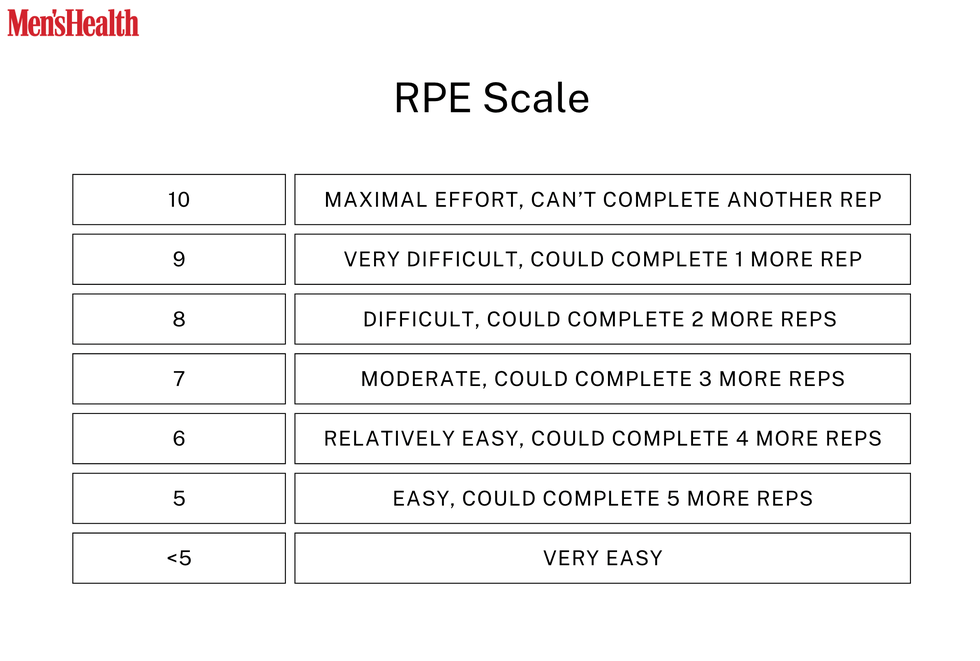
Improving your squat starts with progressive overload. This means gradually increasing the load, reps or total training volume over time to give your body a stimulus to adapt. You don’t need to train to absolute failure on every set, but working a few reps shy of failure is typically enough to stimulate strength gains while still allowing you to recover for your next session. You can use the RPE or RIR scale to gauge your exertion, but bear in mind that many lifters tend to overshoot their effort:
Managing fatigue is key, particularly in your 40s, so programming should include sensible volume, occasional lighter weeks and adequate rest between heavy sessions. Using methods such as autoregulation – where you tailor your effort to match your fatigue and readiness – can help aid consistency.
Accessory exercises that strengthen your glutes, hamstrings, core and upper back can reinforce your squat pattern and improve control under the bar. These could be Bulgarian split squats, step-ups and lunges, while plyo jumps can develop explosive power. You may also benefit from paused squats to develop strength in the bottom of the squat. Consistently using full range of motion in your squat will help with mobility.
Above all, consistency matters most. Pair structured training with sufficient calories, adequate protein and good sleep, and strength gains will follow over time.


