If your current training plan revolves around more sets, more exercises, more days in the gym, then this might feel like heresy. But the routine you’re about to read is built on the opposite idea: do less, recover better, grow more.
The approach comes from bodybuilding iconoclast Mike Mentzer, via a breakdown of his now-infamous ‘Heavy Duty’ training system . Mentzer’s philosophy has always flown in the face of conventional programming, even in his own day, but one thing can’t be denied: Mentzer was able to hold his own alongside the likes of Arnold Schwarzenegger, and that’s one hell of a strong case for his training style.
At its core, Mentzer’s argument was simple: most people aren’t undertraining, they’re doing too much, and that’s what’s holding them back. His solution? Strip everything back to the minimum effective plan – but execute that plan like a beast.
Minimal Effective Dose Training
Mentzer’s reasoning is that as you progressively lift heavier weights, the stress on your body doesn’t increase linearly – it ramps up disproportionately. If you don’t adjust recovery to match, you hit a wall.
Mentzer relied heavily on majorly toned-down volume, often performing just a single working set of a movement, but taken to genuine failure. Not ‘that felt hard’, not ‘a couple left in the tank’ – actual failure. That means if you hit 10 reps and feel like you’ve got three more, you do three more. If you only get five and the sixth won’t budge, you live with five. No chasing arbitrary numbers. No junk volume. No easy reps for rep’s sake.
Mentzer believed the goal isn’t to see how much you can do. It’s to do the precise amount required to stimulate growth – and then get out.
What to read next
But this one-set philosophy isn’t the most controversial thing about Mentzer’s approach. It’s how long you spend out of the gym that goes against the grain of modern science-based training.
The ‘four-day split’ below isn’t designed to be a weekly rotation. In fact it could take you over two weeks to get through it. The idea is to work your way through the sessions sequentially, leaving a minimum of 96 hours between sessions – that means training every four days, or just twice a week. At most.
The Workout Plan
The structure is a four-workout rotation, performed across extended rest periods, training every four days at most. Perform a few warm-up sets for each movement, ensuring you’re completely ready for one all-out assault-to-failure when you hit that working set. If you feel like you’ve left reps in the thank, you’re doing it wrong.
Make careful notes of the weights you use and the reps you achieve; each time you repeat a workout your aim is to add more reps. Once you can do that, add more weight. This is the key.
Day 1: Chest & Back

A1. Pec Deck x 6–10 reps
A2. Incline Press x 1–3 reps
B1. Close-Grip Pulldown x 6–10 reps
C1. Deadlift x 5–8 reps
Day 2: Lower Body
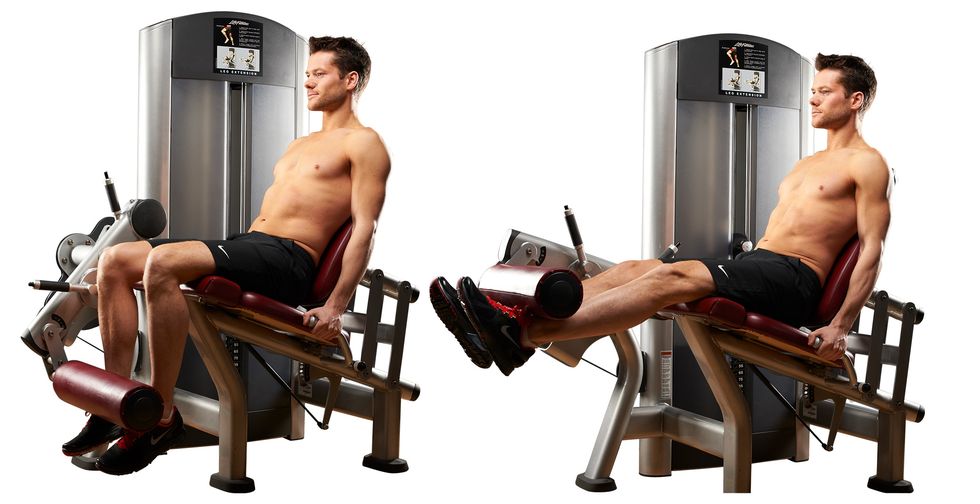
A1. Leg Extension x 8–15 reps
A2. Leg Press (or Squat) x 8–15 reps
B1. Standing Calf Raise x 12–20 reps
(Hamstring work is noticeably absent – Mentzer’s stance is that your hamstrings are already getting enough work from the deadlift)
Day 3: Delts & Arms

A1. Dumbbell Lateral Raise x 6–10 reps
B1. Rear Delt Raise x 6–10 reps
C1. Barbell Curl x 6–10 reps
D1. Tricep Pressdown x 6–10 reps
D2. Weighted Dips x 3–5 reps
Day 4: Legs (again)

A1. Leg Extension 1 x heavy static hold, 10–25 seconds (to failure)
A2. Squat x 8–15 reps
B1. Standing Calf Raise x 12–20 reps
Should You Try It?
Like most extreme approaches, there’s a bit of nuance here. Modern hypertrophy research would likely push back on some of the lower frequency and single-set prescriptions. But the underlying principles – progressive overload, managing fatigue, prioritising recovery – are hard to argue with. And if you’re feeling stuck, burnt out, or like you’re spinning your wheels despite putting in the hours, this might be the fresh start you’re looking for.
As a caveat, we’d add that the warm-up sets, while seldom mentioned, aren’t just important to prepare yourself and avoid injury, but they also add additional volume. Two or three warm-up sets and one all-out attack on a heavy round? Suddenly it doesn’t sound that dissimilar to how other Golden Era bodybuilders trained.

With almost 18 years in the health and fitness space as a personal trainer, nutritionist, breath coach and writer, Andrew has spent nearly half of his life exploring how to help people improve their bodies and minds.
As our fitness editor he prides himself on keeping Men’s Health at the forefront of reliable, relatable and credible fitness information, whether that’s through writing and testing thousands of workouts each year, taking deep dives into the science behind muscle building and fat loss or exploring the psychology of performance and recovery.
Whilst constantly updating his knowledge base with seminars and courses, Andrew is a lover of the practical as much as the theory and regularly puts his training to the test tackling everything from Crossfit and strongman competitions, to ultra marathons, to multiple 24 hour workout stints and (extremely unofficial) world record attempts.
You can find Andrew on Instagram at @theandrew.tracey, or simply hold up a sign for ‘free pizza’ and wait for him to appear.