Reviewed by
 6 min read
I’LL BE HONEST, I have a tendency to drag things out far longer than they should. Conversations, relationships, bedsheets between washes—admittedly, those last two may be related. But something you’ll never again see me extending beyond its natural conclusion is razor blades.
Be it to save money, laziness, or a combination of the two, using a razor with blades dulled well past their limit is one of those things all men do but never talk about. Consider it the nose picking of grooming practices, and not unlike that unruly habit, waiting too long to replace razor blades is both unsanitary and destructive to your health. Plus, it simply makes shaving more difficult and less effective.
“Most shaving problems people blame on their skin actually come down to technique and maintenance,” says celebrity barber Jomo Kenyatta-Lopez. “A quality blade that's clean, sharp, and used properly will always outperform an expensive razor that's neglected.” This is true no matter what type of razor you favor.
Whether it’s a cartridge razor, safety razor, or even an electric razor, you need to regularly replace the blades. However, not every razor will require the same frequency, nor will every skin type or hair type, for that matter. To determine exactly when and how often you need to be replacing your razor, I consulted with a couple of grooming experts.
Why You Need to Replace Blades
To be clear, hanging onto a worn-out blade is a bad idea for more reasons than simply a less close shave, though that is, of course, also a risk. According to celebrity stylist and groomer Jerrod Roberts, dragging dull blades across your skin will result in razor burn and redness, while making you more prone to ingrown hairs.
This is because dull blades do not cut hair as cleanly, creating friction and pushing the hair rather than slicing it. Roberts says that this often results in the hair curling back into the skin, which is why you’ll see more ingrowns. Kenyatta-Lopez adds that a lot of his clients will see this and assume they just need better shaving cream. If you’ve had this thought, fight it. The blade is just overdue for a replacement.
There are risks below the surface, as well. Old razor blades—especially if they’ve been sitting in a wet environment—hoard bacteria, which will only make the irritation and ingrown hair worse and more likely, Roberts says. Not to mention, it’s, er, pretty nasty. This is on top of blades collecting rust, dead skin, and leftover shaving cream over time, all of which will negatively impact both the effectiveness of your shave and the overall health of your skin.
How Often to Replace Each Type of Blade
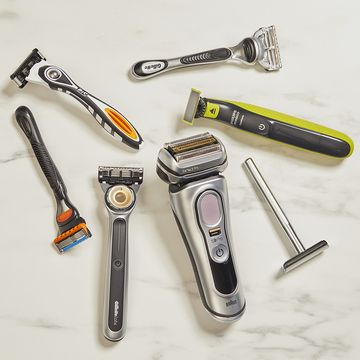
Now that we’re clear on why you need to be promptly replacing your razor blades, we can dive into how often. The biggest factor here will be the type of razor you’re using. Cartridge razors are easy to use, but their multi-blade design creates extra friction and buildup that causes them to dull quickly, Kenyatta-Lopez says.
Safety razors typically stay sharper longer and cost less to replace, though they demand better technique and more regular blade changes. According to Kenyatta-Lopez, electric razors offer the longest lifespan overall since you only swap out the heads or foils periodically instead of replacing a blade every few shaves. But unlike traditional razors, their performance tends to decline gradually over time rather than all at once.
As Roberts explains it, your replacement strategy should break down like this. Cartridge razors can last up to six weeks if you only shave occasionally, but daily shavers will notice them dulling after about two weeks and should replace them after ten to 12 shaves. Safety razor blades stay extremely sharp, though they need to be replaced more often, after five to seven shaves. While annoying, they’re the cheapest replacements, so swapping them this often is less about budget and more related to energy.
Electric razors work differently altogether since you replace the shaving head or foil instead of the blade itself, and those parts can last anywhere from a year to two years depending on the model. Many people end up tossing perfectly good electric razors when all they really needed was a fresh head, Roberts says. If you’re not sure how to find electric razor replacement heads, every major brand has options on Amazon. Simply search the name of your electric razor and replacement heads. It’ll be a fraction of the cost of starting over with a new device.
Signs It’s Time for New Blades
These numbers are merely guidelines. Often, the best indicator of whether a blade needs to be replaced will come down to feel. The most glaring sign that it’s time to re-up is when you feel resistance. You’ll start to notice that it takes more passes over one area to get a clean shave, especially around the neck and jawline, Kenyatta-Lopez says. He adds that once you find yourself overcompensating by pressing harder than usual, the blade is past its prime.
When it comes to safety razors, it’ll be even more obvious—and possibly painful. These are already the riskiest options for shaving, but once you get the technique down you’ll avoid slicing your skin. That is, until the blade dulls. Shaving will start to feel rough or inconsistent with tugging, uneven cutting, or irritation in areas that normally shave clean, Kenyatta-Lopez says.
He adds that for electric razors, you’ll want to look more for patchy shaves or irritation despite proper maintenance and cleaning. Damaged foils and the tool being noisier than usual are also key signs. Roberts adds that if you start seeing rust on any blade, it’s time to throw it out and replace it.
There are also some easy tricks to help extend a blade’s lifespan. The number one mistake dudes make when it comes to maintaining razors is keeping them in the shower, Roberts says. It may feel convenient, but it leaves the blade sitting in constant humidity, which speeds up rust and bacteria buildup.
Many people also fail to rinse their razor thoroughly after shaving, allowing hair and shaving cream residue to dry between the blades, he adds. And while wiping the blade on a towel might seem harmless, it can actually dull and damage the edge faster. Instead, Roberts recommends rinsing it well, shaking off the excess water, and letting it air dry somewhere ventilated.
The Longest Lasting Razor Blades
For safety razors, Roberts points to Astra Superior Platinum blades as the longest lasting, noting that they also work for almost any skin type. However, if you’re looking for the sharpest safety razor blade, Feather is the way to go. However, Roberts warns that these blades should only be used by experienced safety razor shavers, as the sharpness leaves less room for error.
If you’re just starting out with safety razors or looking for a full kit, Bevel offers our best overall shave kit. Kenyatta-Lopez is a fan too, saying that these double-edged blades glide across skin with minimal friction and feature polished edges to handle coarse hair while reducing nicks.
Both pros love Gillette for cartridge razors, as they’re reliable, accessible, and crucially, effective. Roberts specifically calls out Gillette ProGlide as the best cartridge razor out there. He also likes Harry’s, especially under its direct-to-consumer shaving club membership, where you receive top-notch blades regularly without making a trip to the drugstore. For me, there is still one electric razor that outperforms all others on the market: the Braun Series 9 Pro+.
Out of all the electric razors I’ve tested—and there have been a lot of them—The Series 9 Pro+ delivers the closest, most comfortable shave. This is thanks, in large part, to its ultra-sharp surgical-grade steel blades, tech that automatically adapts to your skin and hair thickness, and a flexible head that pivots seamlessly to facial contours. It’s fast, powerful, and remarkably consistent over time, without causing any irritation. Plus, you’ll go nearly two years before you need to replace the shaving head.

5 Astra Superior Premium Platinum Double Edge Safety Razor Blades (Pack of 3)

60 Feather FHS-10 Japanese Steel Razor Blades

Bevel Shaving Kit


Harry's Razor Blades (14 Count)

Meet the Experts
- Jomo Kenyatta-Lopez, celebrity barber and Bevel ambassador.
- Jerrod Roberts, celebrity stylist and groomer, and BLVD & CO ambassador.
More of Our Favorite Shavers and Trimmers
How to Trim Your Neck Beard | How to Groom Body Hair | How to Cut Your Own Hair |How to Trim Your Beard | How to Trim Nose Hair | How to Maintain Your Trimmer | Best Beard Trimmers | Best Nose Hair Trimmers | Pubic Hair Trimmers | Best Hair Clippers | Best Cordless Clippers | Best Back Shavers | Best Head Shavers | Best Body Groomers | Best Razors | Best Electric Razors
Sean Zucker is the Grooming and Reviews Editor at Men's Health. He brings over half a decade of experience covering health, wellness, and lifestyle. When Sean's not writing about hair products, you can find him running for exercise, or toward the nearest food truck.
Christian is the Style and Reviews Director at Men's Health and Women’s Health, where he oversees shopping and style content for both brands. He started his magazine career as an accessories assistant at Vogue, and has since held editorial roles at Tatler Asia and The Manual. When he’s not online shopping, you can find him on long walks with his two corgis.