
From viral 100 rep pull-up challenges to old-school calisthenic training routines, plenty of people are testing how many pull-ups they can do each day. And it makes sense: few exercises build upper-body strength quite like them. They target the back, arms, shoulders and core in one movement. But if your goal is muscle and strength, how many pull-ups per day is actually worthwhile?
The right number depends on your experience level, recovery and how often you’re already training. The key is finding a volume that supports progress without tipping into excessive fatigue.
How Many Pull-Ups Should You Do Each Day?
There’s no magic number that works for everyone and this will largely depend on your own current strength levels, but most can agree that quality trumps quantity. If your form starts to deteriorate – shoulders hiking up, kipping wildly, or shortening your range of motion with your chin failing to reach the bar – it's time to scale it back.
Beginner: 1-20 reps is a solid place to start
Intermediate: 20-50 reps is a good progression
Advanced: 50 reps upwards in one go, on a daily basis
According to MH fitness director Andrew Tracey, 'Daily rep counts of just 30-50 can be extremely beneficial for adding strength and size. You don't need to perform all the reps in one sitting; you can spread them across your training session, or even the day, taking each set to within 3-5 reps of failure (ie, if you can perform 15 reps, sets of 10 are perfect).'
However, if you're having a go at the 100-a-day challenge, it's important to keep it varied. 'If you're going to go higher with your daily rep count, vary your grips to mitigate possible overuse injuries,' adds Tracey,
What to read next
The Benefits of Pull-Ups
Done right, pull-ups are a powerful tool for upper body development, Tracey adds: 'The pull-up is a great bodyweight exercise to perform that's genuinely challenging, even rivalling lifting weights in terms of difficulty, making them an incredible portable muscle-builder.'
They primarily target your lats (the big muscles that span from the top of the back to the sides of the ribcage), while also firing up your biceps, rear delts, and deep core muscles. Beyond aesthetics, they improve grip strength and work the muscles often neglected in push-dominant plans. Mastering your own bodyweight is not only a great beginner's goal, but also translates to better performance in other lifts or everyday movement.
Pull-ups are multi-joint exercises (compound exercises) – meaning they work multiple muscle groups at the same time. This means you can stimulate more muscle growth in less time in comparison to working one muscle at a time with single-joint exercises (isolation exercises). A review published in Sports Medicine states that we should prioritise multi-joint exercises like pull-ups in order to save time.

Should You Do Pull-Ups Every Day?
You can do pull-ups daily, but only if your technique is rock-solid and your volume is smartly programmed. The answer will largely come down to your body's ability to recover in 24 hours. Think of them like squats: great for building strength, but not something you should go to failure on every single session.
Instead of hammering out 100 reps a day, you could try alternating between high-rep days and low-rep days based on your ability to recover and fatigue levels. You can also vary your grip (wide, neutral, supinated) to reduce joint stress and hit your muscles differently.
It's also important to pair pull-ups with pressing and horizontal rowing movements for a balanced upper body plan. It will also help to not neglect mobility work, especially if your shoulders start to feel tight or sore.
More Isn’t Always Better
Pull-ups are effective because they're difficult. But that also means piling on endless reps can quickly lead to sore elbows, shoulders and stalled progress. Instead of aiming for huge daily numbers, most people will benefit more from consistent, high-quality reps performed with good technique and enough recovery between sessions.
The goal should be to find a training volume that challenges your muscles without compromising form or leaving you too fatigued to recover properly.
How to Do Pull-ups
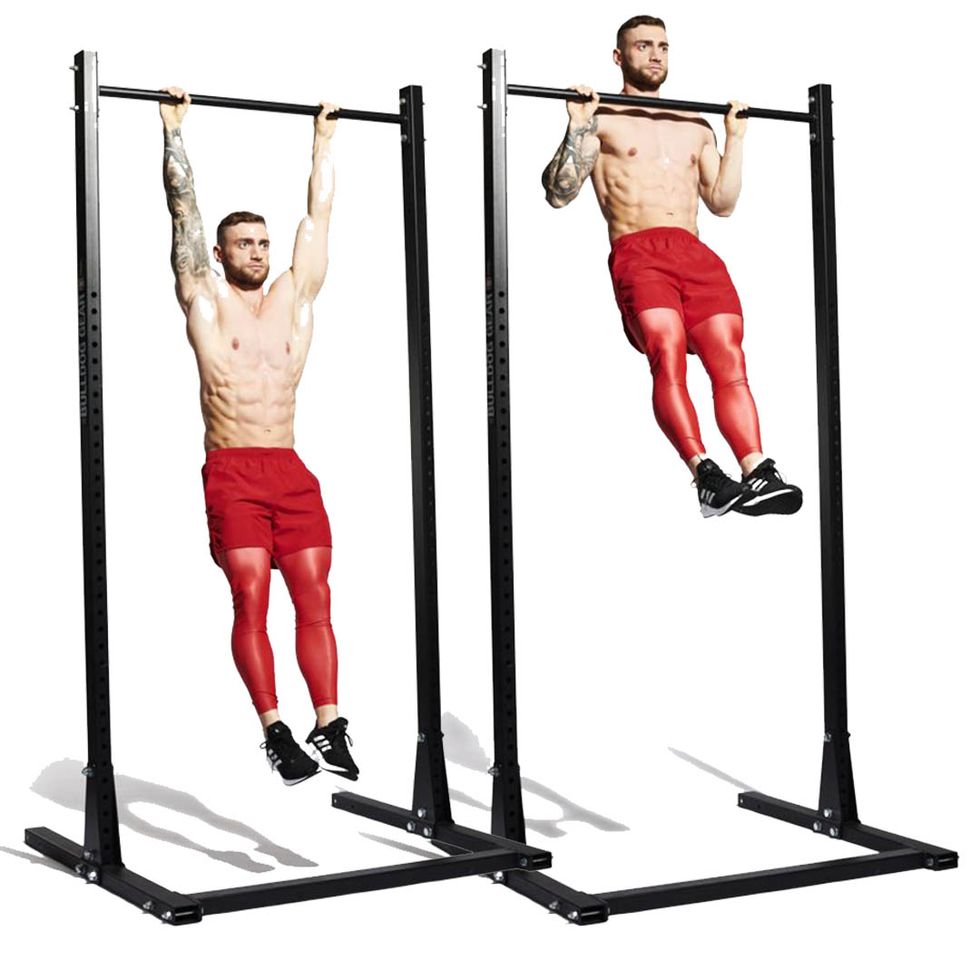
- Grasp a pull-up bar with an overhand grip over shoulder-width apart. Lift your feet from the floor, hanging freely with straight arms.
- Pull yourself up by flexing the elbows while pinching your shoulder blades together.
- When your chin passes the bar, pause before lowering to the starting position.
The Bottom Line
How many pull-ups you should do each day comes down to your goals, your body's capabilities and your ability recover well in 24 hours. Start with manageable volume, prioritise quality reps, and progress gradually. Whether you’re chasing hypertrophy, strength, or just trying to beat your mate’s PB down the park, consistency and smart programming will take you further than any viral challenge.


