
Progressive overload is the linchpin of getting, you guessed it, progression in your training. If you want to go from A to B, no matter how long the journey, it’s still taken one step at a time. Small improvements leading to big results.
However, many progressive overload methods and programming principles can look overly complicated – and like they’re going to take too long. We’re talking about sessions that run longer than a Lord of the Rings marathon, including multiple movements, different intensities and so many percentages you give your calculator a migraine.
But this doesn’t need to be the case.
This simple progression model takes just five minutes, includes just one movement and, over a long enough timeline, will make you stronger, build a bigger back, bigger biceps and forearms, and potentially help you to completely overhaul your body composition.
The 5-Minute Pull-Up Method
The movement we’re using here is the pull-up, but this method could be extrapolated out to plenty of other movements.
Here’s the method: find somewhere to do pull-ups. Given that this protocol only takes five minutes, this can be done at the beginning or end of a workout. For the most bang for your buck you can invest in a home pull-up bar, so this work can be done as an extracurricular session.
What to read next
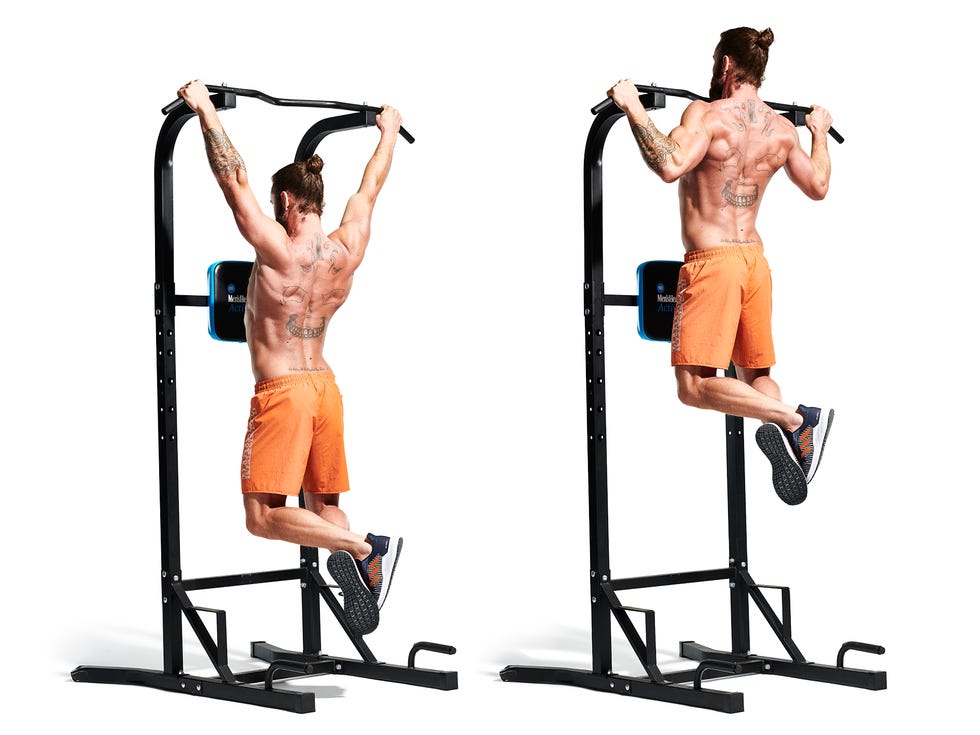
Set a running clock. At the beginning of each minute, perform 1 pull-up. Do this for 5 minutes, for 5 total rounds.
If you manage to complete 1 single, high-quality, tempo-controlled pull-up at the top of each minute, the next time you do this, perform 2 on each minute. If you manage that, do 3.
Continue up in this fashion, performing the protocol two to three times per week. It only takes five minutes, after all.
For example:
- Session one: 1 pull-up every minute, for 5 minutes – 5 total reps
- Session two: 2 pull-ups every minute, for 5 minutes – 10 total reps
- Session three: 3 pull-ups every minute, for 5 minutes – 15 total reps
- Keep building until you can perform 10 pull-ups every minute, for 5 minutes – 50 total reps
You don’t necessarily have to start with sets of 1. You can just do it once to test, then jump to a number you think you can manage – 3s, maybe even 5s.
But the idea is, as soon as you hit a rep target you can’t complete all 5 sets of the same amount of reps, you stick on that range until you break through that plateau, earning the right to proceed.
This simple five-minute protocol leaves nothing up to chance. All you have to do is do the work, session in, session out, five minutes at a time.
If, at the start of the protocol, you’re struggling to perform 5 sets of 3 on the minute, for a total of 15 reps, by the time you’ve worked your way up to 50, meaningful changes will definitely have occurred. Neuromuscular changes, yes – but the changes in the mirror aren’t likely to be very far behind.
Pull-Ups and Body Composition
Why pull-ups? Well, once you’ve got a pull-up bar, they’re a movement that can be performed with low fuss, pretty much any time of the day. They’re also a fantastic litmus test. Of all the bodyweight movements, they’re the one that actually requires you to move the most resistance – the majority of your bodyweight, with no leverage to help.
Which also works as a really good diagnostic tool: how strong are you relative to your own bodyweight?
You may find yourself realising that you want to improve your body composition in order to help with this goal. Which could mean killing two birds with one stone: nailing a solid nutritional and lifestyle programme in order to improve your body composition, while still improving those pull-up reps.
That’s a handy two-for-one. Not bad for five minutes and a bit of reflection.


