2 min read
Ready to get into the best shape of your life? Get free weekly workouts and no-nonsense training insights delivered straight to your inbox. Sign up here and let the gains begin.
PAUL WALTER HAUSER is a versatile actor, whose screen presence isn’t confined to just one genre. Before starring in his new film Balls Up alongside Mark Wahlberg, Hauser spent time as dojo student Stingray in Cobra Kai and stepped into the shoes of murderer Larry Hall in Black Bird. As if his resume isn’t impressive enough, Hauser is also a professional wrestler.
Hauser's diverse work in acting and wrestling can be quite demanding on his physique. In 2024, the actor told MH about how he lost 70 pounds after quitting the California-sober lifestyle. Since then, Hauser has experienced weight fluctuations from booking roles that required him to gain or lose weight.
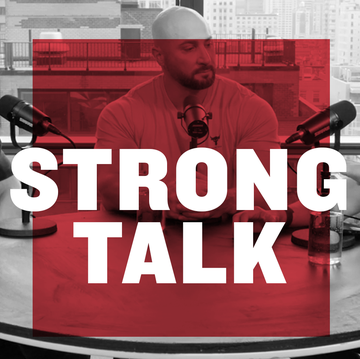
The 39-year-old recently sat down with exercise physiologist and strength coach Dr. Pat Davidson and MH fitness director Ebenezer Samuel, C.S.C.S. to talk about his multiple body transformations and how those efforts have impacted his mental health. The episode also features a debate on the importance of the scale, other metrics to track on a fitness journey, and Hauser’s upcoming projects.

Hauser admits that stepping on the scale can be an emotionally charged moment when you lose weight and gain it back. However, he’s started to recognize other ways to measure progress that have nothing to do with weight. He’s moved away from scale numbers to paying more attention to BMI and total body composition.
He even shared a story about including his son in these efforts while he was on a film shoot in Bogota, Colombia in 2023. “I would put him on my shoulders when we were sightseeing, and I would do 50 to 100 squats with him on my shoulders,” he recalls. “It was a good feeling to be empowered by not just losing weight, but having a slower weight loss while gaining muscles.”
Still, Davidson isn’t so quick to dismiss how useful a scale can be for managing weight loss, especially when you can monitor how you’re able to handle your workouts even as you shed pounds. He argues that a bathroom scale is useful when paired with weight room performance. “I trust the measurement error on the bathroom scale,’ he says. ‘It’s going to be less error prone compared to a human doing circumferences or skin folds.”
In other words, if you can track that you’re able to achieve progress toward your weight loss goal with the scale while still being able to hit your numbers in the gym, you’re going to be in good shape.
Want more deep-dive fitness wisdom from Samuel and other celebs and experts who've been on our Strong Talk podcast? Check out all our episodes here.
Watch The Latest Episodes


Jocelyn Solis-Moreira, MS is the associate health & fitness for Men's Health and has previously written for CNN, Scientific American, Popular Science, and National Geographic before joining the brand. When she's not working, she's doing circus arts or working towards the perfect pull-up.