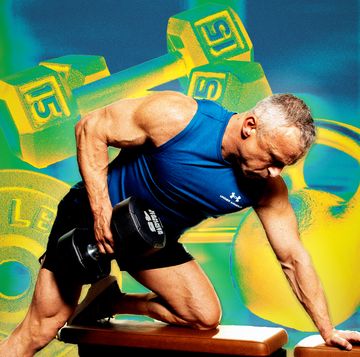
Isometrics have definitely crept back into the hypertrophy conversation over the last few years – and rightly so. Holding positions under high tension can light up muscle fibres in a way traditional reps sometimes miss. But, as elite strength coach Christian Thibaudeau points out, most people are still using them like they’re a strength drill, not a muscle-building tool.
Why Most People Use Isometrics Wrong
‘They are often done sub-optimally,’ Thibaudeau explains, ‘either by doing max efforts that are too short (6-9 seconds), just like strength protocols, or by doing continuous sets that are too long.’
For building muscle, neither approach is likely to cut the mustard. Go too heavy and too short, and you don’t create enough fatigue in the fibres you’ve recruited. Go too light and too long, and your output drops off a cliff without properly challenging the fibres most primed for growth.
What Are Isometric Clusters?
His solution? Isometric clusters.
Instead of grinding through one long 20-30-second hold, break the effort into smaller, high-quality chunks. ‘Do sets of 5-6 maximum-effort “reps” lasting 5 seconds, with 5-10 seconds of rest in between.’
Why Isometric Clusters Build More Muscle
It’s simple, but the physiology backs it up. Those short bursts with brief rest ‘allow you to maintain the strength of the neural drive for longer,’ meaning you keep recruiting high-threshold motor units – the ones with the most growth potential. The result? ‘The fatigue is more peripheral (in the muscle fibres themselves) rather than central.’
What to read next
In other words, you’re tiring out the muscle, not just your nervous system.
Compare that to longer max-effort holds. ‘If you extend the duration… there is a rapid drop in force production.’ By around 12 seconds, output can fall below 80%, and at that point ‘there are almost no fast-twitch fibres left.’ Less force, fewer fibres, less growth stimulus.
It also explains why the classic 6-9-second max push isn’t enough for size. Quoting a Soviet sport scientist, Thibaudeau says: ‘A muscle fibre that was recruited but not fatigued was not trained.’ Recruitment alone doesn’t build muscle – fatigue does.
How to Use Isometric Clusters in Your Training
The takeaway? If you want to use isometrics to actually grow, treat them like reps and aim for high-quality volume, not just brute-force ego efforts or endurance suffer-fests.
Pick a position (mid-squat against pins, paused pull, loaded split squat), hit 5 seconds all-out, rest briefly, and repeat for 5-6 ‘reps’. Keep the tension high, the output consistent and the load appropriate for the time frame.