Our product picks are editor-tested, expert-approved. We may earn a commission through links on our site. Why Trust Us?


The 6 Best Compression Boots to Support Muscle Recovery in 2026, Tested by Fitness Editors
We turn to these for a enjoyable (and effective) post-workout recovery routine.
 Tested by Ebenezer Samuel, C.S.C.S.Fitness Director
MY RECOVERY ROUTINE has included quality time in my compression boots for a few years now. For a lot of guys (myself included) self care is not a strong suit. For many years I went hard until the wheels came off, and eventually I learned I could increase my lower-body blood flow, and thus recover quicker, by using a foam roller. But incorporating compression boots into my post-run regime (even if it is a slightly different recovery stimulus) has forced me to take time for myself and also allowed me to enjoy watching some sports while doing the "right thing" for my body.
Best Compression Boots
- Best Overall: Hyperice Normatec Elites
- Best Entry-Level: Therabody JetBoots Prime
- Most Portable: Hyperice Normatec Go
- Best Multi-Treatment: Therabody JetBoots PRO Plus
- Best Full Body: Hyperice Normatec 3 Full Body
- Best Foot-Specific: Nike x Hyperice Hyperboot
While several brands offer compression boots for workout recovery, it's clear to us that Hyperice and Therabody reign supreme. Since our initial 2021 review of Therabody's compression boots, the brand has introduced an innovative and affordable wireless iteration known as the RecoveryAir Primes. On the Hyperice front, a compact solution called the Normatec Go is an uber-portable compression boot system that targets the calves and allows for easy on-the-go recovery. And most recently it released the Normatec Elites, which have elevated the game with a wireless design.
"Compression boots were initially designed to treat various medical conditions related to poor circulation and fluid retention," explains Dr. Renato Sanchez, PT, DPT, C.S.C.S. Over the last few years, compression therapy has gained popularity in the fitness industry as a muscle recovery tool—especially after the previous popularity of percussion massage guns.
For those who may have doubts regarding how effective compression boots really are in terms of muscle recovery, we understand your concerns. Let's clarify that there is still a significant shortage of scientific research supporting claims about the effectiveness of compression boots in expediting or enhancing the recovery process. (Brands might tell you otherwise, but we only go by the independent studies.) Instead, we can only tell you how we've felt after using them firsthand.
"Compression boots do have value," says MH Fitness Director Ebenezer Samuel, C.S.C.S. "The end result is definitely relaxing—thus allowing my nervous system to down regulate. That down regulation has recovery value."
To simplify the process of choosing from the massive range of options, we've put together a guide to buying compression boots for various individuals. Up next, you'll find our thoroughly tested and vetted backing of the six best compression boots, suitable for every workout routine and budget.
 Best Deal

Hyperice Normatec Elites

Hyperice Normatec Elites
Pros
- No additional cords required
- Easy to travel with, TSA-friendly
- Elite level compression
- Control panel is simple to use

Cons
- Bulkier than travel-specific sleeves

From the moment that the Normatec Elites arrive at your door, fully charged and ready to help you recover within moments, you know that you've made the right choice in compression boot. Normatec has been at the forefront of compression boot technology since it launched in 1998, and has only got better since it was acquired by recovery brand Hyperice in 2020.
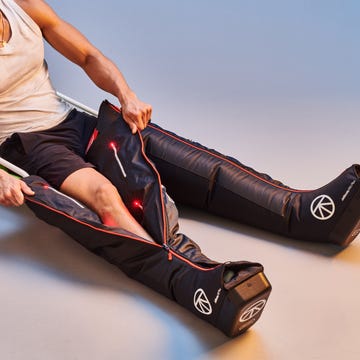
I am a fan of how simple it is to get started, just zip your legs into the sleeves and select the compression level and desired treatment time. The attachments begin to inflate in sequence, starting with your feet and moving upwards. For the amount of relief they provide, the sleeves are fairly light, but you can't really move around much one you are zipped up.
There are no external cords necessary, which is nice. The package comes with a charger that can be used to charge both attachments at the same time. It also comes with a travel bag that you can use to pack the attachments if you want to take them on any trips.
Putting these on after an intense run or leg workout has become a ritual, and I struggle to think of any complaints I have with this unit. They are sleek looking, simple to use, and really help elevate your recovery time at home (or on the go).
Read More: Normatec Elite Review
Therabody JetBoots Prime

Therabody JetBoots Prime
Pros
- Same compression performance as original JetBoots
- Easy to travel with, TSA-friendly
- Solid price point
- Control panel is simple to use
Cons
- Not as customizable as some might want
We were fans of the Therabody JetBoots when they first released, with a streamlined design eliminating cords and separate controllers. Now the JetBoots Prime from Therabody bring those same benefits we enjoyed for a few hundred dollars less. So we're not going to complain.
These boots are easy to move around the home, so you can throw them on anywhere to enjoy the 20-100 mmHg pressure handsfree. These boots have accompanied us on the couch, in bed, and even inside an airport lounge. It's an untethered experience that's super convenient, whether you're new to compression boots or not. Put 'em on, press the buttons on one leg (they're auto-paired, which we found even more convenient), and the air-massage begins.
There is also something nice about being limited to four time intervals (20 minutes, 40 minutes, 60 minutes, continuous) and four pressure levels (25, 50, 75, 100 mmHg). Sometimes minimizing the options makes everything a little more straight forward. This is all managed with the simple control panel on the Primes that's conveniently designed into one of the boots. If you're not wanting to splurge for the Pro system, these are the boots for you.
Read More: Best Home Saunas
Hyperice Normatec Go

Hyperice Normatec Go
Pros
- Under $400
- True wireless thanks to side control panels
- Most portable compression boots offered so far
- Easy to travel with, TSA-friendly
Cons
- Only works the lower leg
Perhaps the coolest design of compression boots yet, our editors found the portable Normatec Go boots easy to transport and simple to use. The one downside is that they only cover the calves, so it's not ideal for those looking to tackle hamstring and quad soreness and recovery. But, if you're someone whose calves cry out following a workout and are looking to dip your toes in the world of compression boots without making too significant of an investment, these are an excellent choice.
These boots don't sacrifice on performance even though they're smaller. We found that the Go especially shines following a long run or full day of walking. "I've had to travel for a few races and these sleeves are a great recovery tool that don't take up an entire piece of luggage," says Senior Fitness Editor Brett Williams, NASM.
Plus, it can be functional to get the compression your calves need without being stuck in a lying position on the couch. The Go's offer a bit more mobility to play video games or work from a laptop–we've even used a pair on an airplane.
Read More: Hyperice Normatec Go Review
Therabody JetBoots PRO Plus

Therabody JetBoots PRO Plus
Pros
- Customizable treatment presets
- No external cords requires
- Red light therapy
- Vibration
Cons
- Expensive
For those in search of a full spa experience for their legs, the PRO Plus system from Therabody aims to give it to you, daring to integrate vibration and red light therapy into its compression boots. Like other models on this list, they show up at your door fully charged. Even with all the additional technology, these boots are surprisingly lightweight, and don't feel to bulky on the legs.
The red light therapy isn't a game-changer (although it does make for a cool selling point). But the vibration is a nice addition to the treatment, and while the actual recovery benefits from it may be negligible, it is pleasant. We also like that the Pros can be programmed with your favorite preset settings, so they're locked and loaded whenever you're ready to get a session in.
They also come with two special preset programs you can't get on the Prime or the original JetBoots: Isolation and Interval mode. From there, the customization gets more intense. We're talking adjustable pressure time, hold time, and pressure range that provide the opportunity to work your muscles the best way you see fit at any given moment.
Read More: Best Massage Guns
| Compression Levels | 20-100 mmHg in increments of 5 |
| Portability and Storage | Included storage pouch for boots |
| Battery Life | Up to 4 hours |
| Additional Features | Connectivity with Therabody App |
Hyperice Normatec 3 Full Body

Hyperice Normatec 3 Full Body
Pros
- More affordable than Therabody's bundle
- Comes with hip and arm sleeve attachments
- Same quality performance as on the Normatec 3 legs
Cons
- Still expensive when considering total investment
Normatec's Full Body system is practical than most other full-body systems out there. Reason being, this version covers the areas people are more likely to be sore in, like the hips and legs, as well as the arms. Hyperice's attachments here are just better, and the straps make them fairly simple to put on by yourself. The only pain point is if you want to use both arm attachments, you'll likely need someone to help you strap in.
The ability to treat your hips and arms is a big win for anyone looking for a more well-rounded solution. And while compression to this extent doesn't guarantee muscle recovery, a half hour treatment will definitely help you relax after an intense session or even just rough day at the office. (Just note that the arms are pretty restrictive to don; don't expect to type emails comfortably while treating your biceps and triceps.)
The Normatec 3.0 control unit can plug into two attachments at a time, so it is up to you whether you want to treat both legs, two arms, or any other combination of two. For a true full body treatment, you can alternate between sides after your first session is complete.
Read More: Hyperice X Review
Nike x Hyperice Hyperboot

Nike x Hyperice Hyperboot
Pros
- Powerful heat and compression
- Addresses feet specifically
- Great look
Cons
- Isolated to providing therapy to feet
The Hyperboots were first revealed at the 2024 Paris Olympics and were used by athletes like LeBron James during the games, along with a vest that also featured similar technology. After the reveal, the MH team was excited to get our hands on these, and when we did this summer, we weren’t disappointed.
The Hyperboots, which look more like high-tech, high-top sneakers than boots, show up in a sleek black box emblazoned with the logos for Hyperice and Nike like any other pair of footwear. The boots themselves have a great aesthetic, looking cool enough to even wear on the streets of New York. In order to be used, they are charged with a standard USB-C cable (a welcome sight as opposed to other devices that try to create proprietary chargers).
Let's be clear though, these Hyperboots aren't true compression boots, so you may not get all of the benefits we mentioned above. But you do get a piece of gear that is unique an innovative with sequential air compression combined with targeted heat, which makes it a solid warmup device, as well as a solid late night recovery option, when you want to hit errands as you treat.
Once you’re strapped into the shoes, there are three compression settings, going up to 210 mmHg—more than any other device in this guide. There are also three heat settings going up to 125 degrees Fahrenheit, which is more than you need. “Nike definitely got things right from a tech perspective,” says MH Fitness Director, Ebenezer Samuel, C.S.C.S. who got an early pair sent. “The compression and heat is great, especially around the heel. I only wish I was feeling the compression the same on my entire foot.”
The consensus on the Hyperboots is that they are an impressive piece of technology that bring relief to a part of our body that takes a lot of punishment, especially if you are training hard. And while the cost is a little high, these stylish sneakers do help alleviate aches, making them a valid purchase if you have the means. Hyperice’s Normatec Elites have become a regular part of my recovery routine, and I could see the Hyperboots becoming one, too.

Features at a Glance
| Compression Levels | 3 (50-210 mmHg) |
| Portability and Storage | Strap on and store like a pair of high-top sneakers |
| Battery Life | 8 hours (with compression), 1.5 hours (with heat) |
| Additional Features | TSA-friendly, Water Resistant, Connectivity with Hyperice App |
What to Consider
Compression Level and Adjustability
The unit of measure that you will see when describing the pressure that these compression boots give is millimeters of mercury (or mmHg). The minimum amount you will commonly see is 20 mmHg, which is a similar amount of pressure that you would get from your standard compression sock, with it going up from there. The ability to adjust compression intensity is essential to accommodate varying recovery needs and your own preferences.
Some products offer more adjustability and levels of compression than others, allowing you to fine-tune your experience to the exact compression you're looking for. Look for boots that offer as much adjustability as possible, with no less than four compression levels.
Ease of Use
Consider the convenience of putting on and taking off the compression boots. Look for user-friendly designs with simple controls or automated features that make using and operating the boots—from start to finish—simple and accessible. Wireless capabilities have become a little more prevalent, and obviously offer the simplest and most portable option—though they often come with a heftier price tag
Portability and Storage
If you plan to use the boots at home or while traveling, consider portability and storage options. Compact designs (such as the Normatec Go) or accompanying carrying cases can make transportation and storage more convenient. And again, the wireless design is key for portability and on-the-go use.
Battery Life and Charging
For battery-operated compression boots, evaluate the battery life and charging time. Longer battery life ensures uninterrupted use during recovery sessions, while quick charging capabilities reduce downtime between uses. We recommend looking for a battery life of three hours or more for an optimal experience. While you won't (read: should not) use your boots for three hours in a single session, a long battery life ensures you have to charge them after every session.
Additional Features
Explore any extra features or functionalities offered by the compression boots, such as massage modes, heat therapy, or integration with mobile apps for personalized recovery programs. The Hyperice products on this list feature connectivity with the brand's app, while the Therabody app features Bluetooth connectivity that learns from your use and integrates into Apple Health and Google Fit. Remember, though, that what you're chasing with compression boots should be quality compression. Brands love blending in other traits (red-light therapy, etc.), but don't pay extra for these.
Brand Reputation and Reviews
Research the reputation of the brand and read reviews from other users to gauge the effectiveness and reliability of the compression boots. Many brands provide compression boots for post-workout recovery, but our testing has revealed Hyperice and Therabody as the most trusted. Since our initial evaluation in 2021, we have been continuously impressed by the reliability and quality of these two brands.
How We Selected
Being the Fitness and Commerce Editor of Men's Health means I get my hands on every piece of new recovery gear that releases, sometimes before it releases. To build this guide to the best compression boots, I took the existing list of best-selling boots in the market and put them up against overlooked classics and newly released options.
Along with Men's Health fitness editors and experts including Fitness Director Ebenezer Samuel, C.S.C.S. and Senior Fitness Editor Brett Williams, NASM, we invested countless hours to put all major compression boot brands to the test by evaluating each model's comfort, fit, ease of use, value, and overall performance. We also sought expertise from physical therapists Renato Sanchez, PT, DPT, C.S.C.S. of Bespoke Treatments San Diego and Dan Giordano, PT, DPT, C.S.C.S. of Bespoke Treatments NYC to understand the role compression can play in recovery and rehabilitation.

Meet The Experts
- Renato Sanchez, PT, DPT, C.S.C.S. is a physical therapist of Bespoke Treatments San Diego.
- Dan Giordano, PT, DPT, C.S.C.S. is a physical therapist of Bespoke Treatments NYC
How Do Compression Boots Work?
Compression boots work by using air pressure to control the blood circulation in your legs.
"As each chamber in the boots fills with air and compresses more tightly, it prevents a large amount of blood from circulating through that part of your body," says Samuel. "So when the boots tighten around your feet first and then your calves, your blood flow to those areas is limited. As this compression continues around your entire leg, you’re left with even more limited blood flow. But just a moment after all that, the chambers methodically deflate, permitting blood to travel first into your thighs, then down through your lower legs, then into your feet."
The theory behind this practice is the onrush of blood will help bring nutrients to help your legs recover efficiently, but this has not been proven for fact.
"There is conflicting evidence that compression devices aid in long term muscle recovery from delayed onset muscle soreness," according to Dr. Sanchez. "However, there has been research that suggests short term relief from exercise induced muscle damage."
Despite the lack of proof, the gentle squeezing of the leg muscles can feel relaxing—even massage-like at times.
To ensure your blood circulation doesn't get cut off Therabody and Hyperice have capped its devices to only reach specific amounts of pressure (measured in mmHG). So as long as you properly place the boots on your legs and use them for the time settings given, your risk of injury is low. Just make sure if you're new to using compression boots you start with the lowest setting first with short periods of time. Then, as you get more comfortable with using your compression boots, you can play with the higher mmHG levels and time settings.
Why Are Compression Boots So Expensive?
Buying a pair of compression boots is no small investment, which is why we took the time to vet the most trustworthy products above. Painting in broad brushstrokes, compression boots are largely expensive because you're bringing high-level compression therapy tech into to the comfort of your own home.
So with the price points you see with Hyperice and Therabody, you have to consider the amount of research and development needed to help advanced the compression boots while still being easy to use. Features like simple control panels, built-in internal pumps, preset programs, and compression targeting are several examples of tech that's been improved upon in the last few years.
Second to consider is portability, as brands have been able to condense the size to make them relatively easy to move around the house and travel with. Last is safety, as brands have to make sure the compression boots operate within a specific boundary to ensure you receive a tightening effect on your muscles without going too far and potentially causing injury.
When (and How Long) to Use Compression Boots
Compression boots can be used every day, according to Dr. Giordano. Especially for intense exercisers.
Aim to wait a few hours after any workout, says Samuel, to get the most out of your compression boots. "Removing inflammation too soon after a workout doesn't give your body a chance to adapt to the training stimulus you just created," says Samuel. "Think of compression boots as an ideal way to end a tough training day, instead of using them immediately after a run or workout."
There's another use for them, too. "They are commonly used after intense exercise, but can also be used prior to exercise as part of a warm up routine," says Dr. Sanchez. "I suggest using them for 10-15 minutes pre exercise."
Keep in mind: It’s important to first discuss with a healthcare professional to determine if compression boots are right for you.
More of the Best Compression and Recovery Gear
Best Compression Shorts | Best Compression Pants | Best Massage Guns | Hypervolt Go 2 vs. Theragun Mini | Best Massage Guns on Amazon | Best Ice Bath Tubs | Best Infrared Sauna Blankets | Best Compression Shirts | Best Recovery Slides and Sandals | Best Compression Pants | Best Compression Socks | Best Foam Rollers | Best Home Saunas Normatec Elite Review
Charles Thorp is the Fitness and Reviews Editor at Men’s Health, where he shares the best product recommendations in gym equipment, recovery tools, supplements, and more. Following an early life in athletics, Charles became a NASM-certified trainer and began writing programs alongside the most respected coaches in the world. Since entering the world of fitness content, Charles has had the opportunity to learn from and train alongside high performance individuals from the NFL, UFC, NBA, Formula 1, CrossFit, US Olympics, and Navy SEALs. When he’s not writing about training programs or gear, he can be seen at the gym or in the wild, putting them to the test.
Ebenezer Samuel, C.S.C.S., is the fitness director of Men's Health and a certified trainer with more than 10 years of training experience. He's logged training time with NFL athletes and track athletes and his current training regimen includes weight training, HIIT conditioning, and yoga. Before joining Men's Health, he served as a sports columnist and tech columnist for the New York Daily News.

Readers Also Read
The Compression Boots Our Editors Recommend

Oura Ring 4 and Oura Ring 4 Ceramic Prime Day Sale

The 9 Fitness Trackers Worth Your Money

The Gear That Helps Keep Tim Howard on the Ball


